
Quick Answer
How to layer skincare products is simple once you know the rule: apply products from thinnest to thickest, and put sunscreen last in the morning. Cleanse first, then a treatment serum, then moisturizer, then sunscreen. At night, use the same order without sunscreen. A thin product goes on early because it needs clean skin, and a thick product goes on late because it seals the layers below it. For the full ingredient guide, see our guide on skincare ingredients explained.
The One Rule: Thinnest to Thickest
Order matters because each product has a job, and that job depends on reaching your skin. A serum is thin and concentrated, made to sink into clean skin. A moisturizer is thicker, made to seal water in. If you put the moisturizer on first, much of the serum never reaches your skin.
Sunscreen is the clearest example. It forms an even layer on your skin, so anything put on top of it leaves gaps. That is why sunscreen is always last in the morning.
The rule to remember is thinnest to thickest. A cleanser is first because it washes the surface clean and is rinsed away. A serum is next because it is thin and carries the active ingredients. A moisturizer comes after the serum because it is thicker and seals the layers below it in place. Sunscreen is last in the morning because it must sit on the very top.
There are two small exceptions. Sunscreen always goes last in the morning, even if your moisturizer feels thicker. A face oil goes after moisturizer, because oil seals everything below it.
| Step | What to apply | Why it goes here |
|---|---|---|
| 1 | Gentle cleanser | Washes skin clean, rinsed away |
| 2 | Treatment serum | Thin, needs clean skin |
| 3 | Moisturizer | Seals water and serum in |
| 4 | Sunscreen, morning only | Sits on top, forms a shield |
| Night | No sunscreen | End with moisturizer |
When you add a new product, ask one question: is it thinner or thicker than what I already use? A thin product goes early. A thick product goes late. If you cannot tell, test a drop on the back of your hand. What spreads like water is thin. What sits like a cream is thick.
The Morning Routine, Step by Step
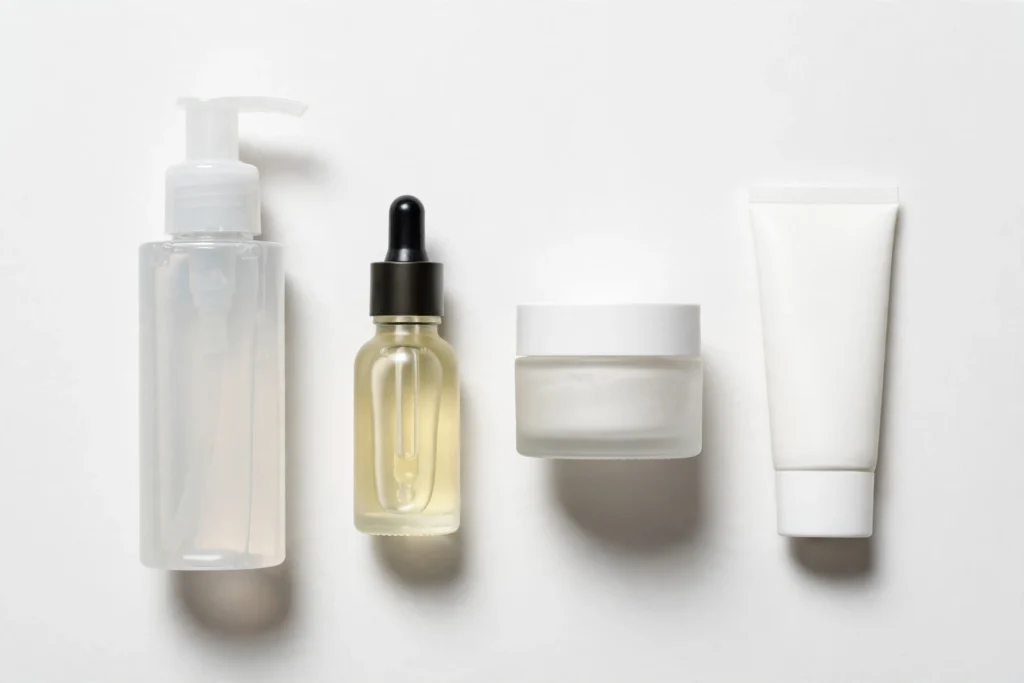
The morning routine has four steps and takes about three minutes. The goal is protection: clean skin, one treatment if you need it, moisture, and a sun shield.
Step 1 is a gentle cleanse. Wash with a gentle cleanser and lukewarm water. If your skin feels tight after washing, the cleanser is too harsh. Pat dry with a clean towel. Do not rub.
Step 2 is a treatment serum, if you use one. A vitamin C derivative is a common morning choice because it brightens dull skin. It is a gentler option than pure L-ascorbic acid, and it suits sensitive skin better. It is a different form, not the same thing. A niacinamide serum is another gentle morning option. For sensitive skin, use a product with 2 to 5 percent niacinamide. Pick one serum, not both.
Step 3 is moisturizer. Moisturizer locks water into the skin and supports the barrier through the day. Oily skin needs a light gel moisturizer. Dry skin needs a richer cream. Apply it while the skin is still slightly damp, so it seals the water in.
Step 4 is sunscreen, always last. Use a broad spectrum sunscreen with SPF 30 or higher every morning, even on cloudy days. Apply it as the final step, after moisturizer, and let it sit for a moment before makeup.
A simple morning routine can stay affordable. CeraVe Foaming Facial Cleanser 16 oz is $16.19, prices checked November 2026. The Ordinary Niacinamide 10% + Zinc 1% 30 ml is about $6, prices checked November 2026. CeraVe Moisturizing Cream 16 oz is $15.99, prices checked November 2026. Neutrogena Ultra Sheer Dry-Touch SPF 55 is about $10 to $11, prices checked November 2026. Those four products add up to about $48 to $49, prices checked November 2026, which is under $50 in total. The niacinamide product named here is 10 percent, so if your skin is sensitive, use it only every other day and patch test first.
The Night Routine, Step by Step
The night routine follows the same order, minus sunscreen. Night is when skin repairs itself, so the focus shifts from protection to treatment. The routine is still short: cleanse, treat, moisturize.
Step 1 is a gentle cleanse. Wash with the same gentle cleanser you use in the morning. At night, the cleanser has more to remove: sunscreen, makeup, sweat, and dirt. If you wear makeup or a heavy sunscreen, wash twice. Use lukewarm water, not hot.
Step 2 is treatment, if you use one. Night is the best time for treatments that make skin sensitive to sun. A gentle exfoliant goes here, one to two times a week at most. A gentle retinol also goes here. Start retinol with 2 to 3 nights a week at first. Pick one treatment per night, not several at once. For sensitive skin, a niacinamide serum at 2 to 5 percent is the safer pick.
Step 3 is moisturizer, as the last step. At night, moisturizer is the final layer. It seals in the treatment and keeps water from escaping while you sleep. Dry skin often needs a richer cream at night. The order stays the same.
Always use sunscreen the next morning after a night when you used retinol. Retinol can make skin more sensitive to sun. If your skin turns red, peels, or stings after retinol, use it less often, not more.
How Long to Wait Between Steps
You do not need a timer between steps. Let each layer sink in before you add the next one. If the last layer still feels wet on your face, wait a little longer. If it feels dry to the touch, move on. For most people, that takes less than a minute per step, and the whole routine takes about three minutes.
A short wait helps in two places: after a treatment serum, so the moisturizer does not push it around, and after sunscreen, so makeup does not disturb the even layer. Those are the two moments when rushing causes the most trouble. A serum that is pushed around may not spread evenly.
Do not wait so long that your skin dries out between steps. Moisturizer works best on slightly damp skin, because it seals the water in. If you wait five minutes after cleansing, your skin may feel dry and tight, and the moisturizer has less water to seal in. The goal is a calm, steady pace, not a long pause. If you use a vitamin C derivative in the morning, let it sink in for a short moment before moisturizer, just like any other serum.
Common Order Mistakes
Most order mistakes come from the same cause: too many products, applied in the wrong sequence. Here are the ones beginners make most often.
Moisturizer before serum is the most common mistake. The serum cannot reach your skin through a layer of cream. Swap the two steps and the serum starts working again.
Sunscreen in the middle of the routine is the next most common mistake. Sunscreen only works as the last step in the morning. If you put serum or moisturizer on top of it, you break up the even layer it forms.
Two treatments at once is another common mistake. Using a strong exfoliant and retinol on the same night is too much for most skin. The result is redness and peeling, not faster results. Use one treatment per night.
Skipping moisturizer because your skin is oily is also common. Oily skin still needs moisture. When oily skin gets dry, it often makes more oil to compensate. A light gel moisturizer hydrates without adding shine.
The last mistake is adding too many products at once. A new product every day makes it hard to know what helps and what irritates. Add one product at a time, use it for at least two weeks, and watch how your skin reacts.
Frequently Asked Questions
What order should I apply my skincare products?
Apply from thinnest to thickest. Cleanse first, then a treatment serum, then moisturizer, then sunscreen in the morning. At night, use the same order without sunscreen. A thin product goes early, and a thick product goes late, so it can reach clean skin.
Where does niacinamide go in a routine?
Niacinamide goes after cleansing and before moisturizer, because it is a thin serum that needs clean skin. For sensitive skin, use a product with 2 to 5 percent niacinamide. A 10 percent product is stronger, so use it only every other day and patch test first.
How long should I wait between skincare steps?
Let each layer sink in before you add the next one, usually less than a minute. If the last layer still feels wet, wait a little longer. If it feels dry to the touch, move on. Do not wait so long that your skin dries out before moisturizer.
Can I use retinol in the morning?
It is better to use retinol at night, because it can make skin sensitive to sun. Start with 2 to 3 nights a week, then build up slowly if your skin stays calm. Always use sunscreen the next morning after a night when you used retinol.
What is the biggest layering mistake beginners make?
The biggest mistake is putting moisturizer on before serum. A thick cream can block a thin serum from reaching your skin, so the serum is wasted. Swap the two steps, and the serum can work again. Sunscreen in the middle of a routine is the next most common mistake.
Sources and Further Reading
- American Academy of Dermatology (dofollow): basic skin care steps and daily sunscreen guidance.
- Cleveland Clinic guide to skincare ingredients (nofollow): how common skincare ingredients work.
- CeraVe (nofollow): cleanser and moisturizer product details used in the routine examples.
This article is general information only, not medical advice. If you have a skin condition, are pregnant, or take prescription skincare, talk to a dermatologist before changing your routine.
3 thoughts on “How to Layer Skincare Products: The Right Order”
Comments are closed.