
Quick Answer
Best sunscreen for face no white cast is a formula that blends into your skin tone without leaving a pale or grey film, and the right pick depends on the filter type, the finish, and how you test it. Mineral formulas can leave a cast because their filters sit on the surface. Chemical formulas and tinted mineral formulas often look clearer, especially on deeper skin tones. Test a small amount on your jawline in daylight, wait ten minutes, and check in a mirror and in a photo. Use a full finger length each morning as the last step of your routine. See our guide on skin concerns by skin type.
Why Mineral Sunscreen Can Leave a White Cast
Mineral sunscreen sits on the surface of the skin and reflects light away from it. Its filters are fine white mineral particles, and those particles can stay visible after you rub the product in. On fair skin, a light cast may be hard to see. On deeper skin tones, the same finish can look pale, grey, or ashy.
A thick layer and a dry, chalky base show more than a thin layer on a smooth base. A white cast is cosmetic, not a sign that the sunscreen has failed, but if it makes you use less or skip sunscreen, it becomes a real problem, because sunscreen only works when you use enough of it every day.
Chemical, Mineral, and Tinted: What Each Type Means
Chemical sunscreen uses filters that absorb into the top layer of skin and absorb light rather than reflecting it. These formulas often rub in clear. Some sting around the eyes or irritate sensitive skin. If one stings, stop using it there and try a different type.
Mineral sunscreen uses mineral filters that sit on the surface and reflect light. These formulas suit many people with sensitive skin. Their main drawback is the cast above. Only a test shows how one looks on you.
Tinted mineral sunscreen is a mineral formula with a small amount of color added to help it blend with skin tone. The tint is not makeup and does not replace foundation. Shades are limited, so a tint that suits one skin tone may look off on another.
| Type | How it works | Cast risk | Finish | Best test |
|---|---|---|---|---|
| Mineral | Sits on skin | Higher on deeper skin | Can look pale | Jawline test |
| Chemical | Absorbs light | Lower, often clear | Usually light | Check for sting |
| Tinted mineral | Mineral plus color | Lower than plain | Blends better | Match to jawline |
No single type wins for every face. Judge each product on your own skin, not on a claim on the front of the tube.
How to Test for White Cast Before You Commit
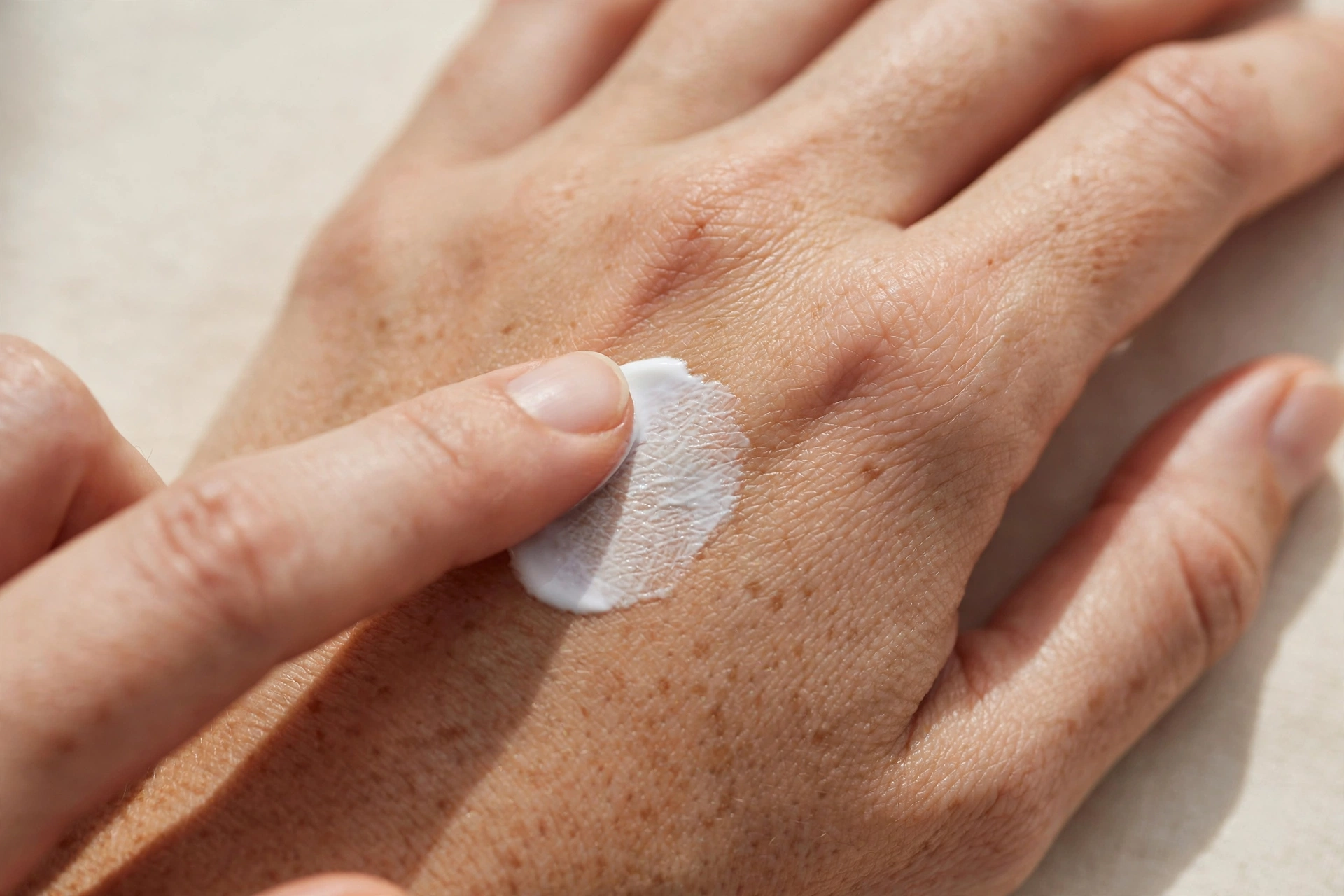
Start with a small amount on your jawline and one cheek. Rub it in fully, and do not add makeup or powder on top yet. Then wait ten minutes. Sunscreen changes as it sets, and a finish that looks white at first can settle, while one that looks fine at first can turn grey as it dries.
Check the test area in daylight, not only in bathroom light. Look in a mirror, then take a photo with your phone, because a cast can show clearly in a photo. If the test area still looks pale or grey next to the skin around it, that formula is not a good match for you.
How Much to Use and When to Reapply
Use a full finger length of sunscreen for your face and neck each morning. Squeeze a line from the tip of your index finger to the first joint. Most people use far less than this, and too little product means less protection and a patchy layer.
Apply sunscreen as the last step of your morning routine. Anything you put on top of sunscreen can disturb the even layer it forms, so let it set for a moment before makeup. Reapply every two hours while you are outdoors, and sooner after sweating or swimming.
A Simple Morning Routine Under $43
A sunscreen works best as part of a short morning routine, not on its own. Cleanse, moisturize lightly, then protect.
Cleanse with CeraVe Foaming Facial Cleanser, 16 oz, $16.19. Wash with lukewarm water, morning and night, and pat dry with a clean towel. The cleanser removes dirt, oil, and old sunscreen without stripping the skin.
Moisturize with CeraVe Daily Moisturizing Lotion, 12 oz, $14.99. Apply it while the skin is still slightly damp, so it seals water in. This lotion is lighter than a rich cream, so it layers well under sunscreen.
Protect with Neutrogena Ultra Sheer Dry-Touch Sunscreen SPF 55, about $10 to $11. Use a full finger length as the final step, and let it set before makeup. The three products together cost about $41 to $42 in total, which is under $43. Prices checked November 2026.
If Your Skin Is Deeper, Oily, Dry, or Sensitive
Deeper skin tones show a white cast most clearly, so the test in daylight matters even more for you. Tinted mineral formulas and chemical formulas often look clearer than plain mineral formulas. Test each one on your jawline and check it in a photo.
Oily skin often suits a light lotion under sunscreen and a sunscreen with a dry or matte finish. Skipping moisturizer does not reduce oil, it usually increases it.
Dry skin needs moisture under sunscreen, or the sunscreen can look patchy and settle into dry areas. Use a richer cream at night and a good layer of moisturizer in the morning, then give it a minute to absorb.
Sensitive skin should introduce one new product at a time. Patch test a new sunscreen on your jawline for a few days before you use it on your whole face. If a chemical formula stings, try a mineral formula, and if a mineral formula leaves a cast, try a tinted mineral formula next.
For a glow step after sunscreen has set, some people use e.l.f. Halo Glow Liquid Filter, 1.06 oz. It is a liquid filter, not a primer and not a setting spray, and it goes on after sunscreen, not before it. It adds glow, so it never replaces sunscreen.
Vitamin C, Niacinamide, and Retinol Around Sunscreen
Vitamin C comes in several forms. Pure L-ascorbic acid is one form, and derivatives such as Ascorbyl Glucoside are gentler, more stable derivatives that suit many beginners. Derivatives are not the same as pure L-ascorbic acid. Pure L-ascorbic acid is the most studied form, but it can sting sensitive skin and lose strength once the bottle is open. Use it in the morning under sunscreen.
Niacinamide evens tone and helps the barrier. For sensitive skin, use a 2 to 5 percent niacinamide product. The Ordinary Niacinamide 10% + Zinc 1%, 30 ml, is a strong 10 percent product, so use it only every other day at first, with a patch test, if your skin is sensitive. Never use a 10 percent product daily on sensitive skin from day one.
Retinol is a night product, not a morning product. Introduce it slowly, two to three nights a week at first, and always use sunscreen the next morning. Do not combine retinol freely with strong exfoliants.
Common Mistakes
Using too little sunscreen. A thin layer looks better and leaves less cast, but it also protects less. Find a formula you can use in the full amount.
Judging a sunscreen in bathroom light only. Bathroom light is warm and soft, and it hides a cast that daylight shows clearly. Always check a new sunscreen in daylight and in a photo before you decide.
Putting makeup on before sunscreen sets. Makeup rubbed over wet sunscreen disturbs the layer and can push it into patches. Let sunscreen set for a moment first, then press makeup on gently.
Skipping sunscreen on cloudy days. Sun reaches your skin through cloud. Sunscreen is a daily step, not a sunny day step.
Changing products every week. Every new sunscreen restarts the test. If you change two products at once, you cannot tell which one caused a cast, a breakout, or a sting. Change only one thing at a time.
Frequently Asked Questions
What is the best sunscreen for face no white cast?
A formula that blends into your skin tone without leaving a pale or grey film. Tinted mineral and chemical formulas often look clearer than plain mineral formulas, so test one on your jawline in daylight before you buy a full tube. Use a full finger length each morning as the last step of your routine.
Why does mineral sunscreen leave a white cast?
Mineral filters sit on the surface of the skin and reflect light, and the white mineral particles can stay visible after you rub the product in. The cast shows most on deeper skin tones and in photos. Tinted formulas add a small amount of color that helps the finish blend in with your skin tone.
How do I test sunscreen for white cast?
Apply a small amount to your jawline and cheek, rub it in fully, and wait ten minutes in daylight. Check it in a mirror and in a phone photo, and compare the test area with the skin around it. If it still looks pale or grey, try a tinted or chemical formula instead.
How much face sunscreen should I use?
Use a full finger length for your face and neck each morning, as the last step of your routine. Spread it evenly and let it set before makeup. Reapply every two hours while you are outdoors, and sooner after sweating or swimming.
Can I use sunscreen with vitamin C, niacinamide, or retinol?
Yes. Use vitamin C and niacinamide in the morning under sunscreen, and use retinol only at night, two to three nights a week at first, with sunscreen the next morning. Never combine retinol freely with strong exfoliants, and patch test each new product first.
Sources and Further Reading
- American Academy of Dermatology (dofollow): basic skin care steps and daily sunscreen guidance.
- Cleveland Clinic guide to skincare ingredients (nofollow): how common skincare ingredients work.
- Neutrogena (nofollow): sunscreen product details.
This article is general information only, not medical advice. If you have a skin condition, are pregnant, or take prescription skincare, talk to a dermatologist before changing your routine.
4 thoughts on “Best Sunscreen for Face No White Cast: How to Pick One”
Comments are closed.