

Every skin problem has a cause, and every cause has a fix. The mistake most people make is treating the concern without thinking about their skin type. A strong acne product that works for oily skin can wreck dry skin. A rich cream that fixes dryness can break out oily skin.
This skin concerns by skin type guide matches each common concern to the right treatment for your skin type. Start with your skin type, then pick the fix.
The Short Answer
Fix the base routine first: gentle cleanser, moisturizer, sunscreen. Then add one targeted active for your main concern. Acne needs BHA or adapalene. Dark spots need vitamin C and sunscreen. Dullness needs gentle exfoliation and hydration. Redness needs calm, fragrance free care. Fine lines need retinol and sunscreen. Give each fix 8 to 12 weeks.
Start With the Base Routine
No targeted treatment works well on a broken base. Before you add any active for a concern, make sure you have these three steps in place:
- Gentle cleanser morning and night, matched to your skin type.
- Moisturizer morning and night, matched to your skin type.
- Sunscreen SPF 30 or higher every morning.
If you do not have the base yet, start with our beginner skincare routine guide. It takes 4 weeks to build the base. Then come back here and add one targeted active.
The Concern Map
| Concern | Main cause | Best active | Time to see results |
|---|---|---|---|
| Acne and breakouts | Clogged pores, oil, bacteria | BHA, adapalene, niacinamide | 6 to 8 weeks |
| Dark spots | Sun damage, post acne marks | Vitamin C, niacinamide, azelaic acid | 8 to 12 weeks |
| Dull skin | Dead skin buildup, dehydration | AHA, vitamin C, hyaluronic acid | 2 to 4 weeks |
| Redness | Irritated barrier, rosacea, sensitivity | Azelaic acid, niacinamide, ceramides | 4 to 8 weeks |
| Fine lines | Collagen loss, sun damage, dryness | Retinol, vitamin C, peptides | 8 to 12 weeks |
| Large pores | Oil, loss of firmness | Niacinamide, BHA, retinol | 6 to 12 weeks |
| Dry patches | Weak barrier, low oil | Ceramides, hyaluronic acid, squalane | 1 to 4 weeks |
| Blackheads | Clogged pores with oil | BHA, retinol | 4 to 8 weeks |
Acne and Breakouts
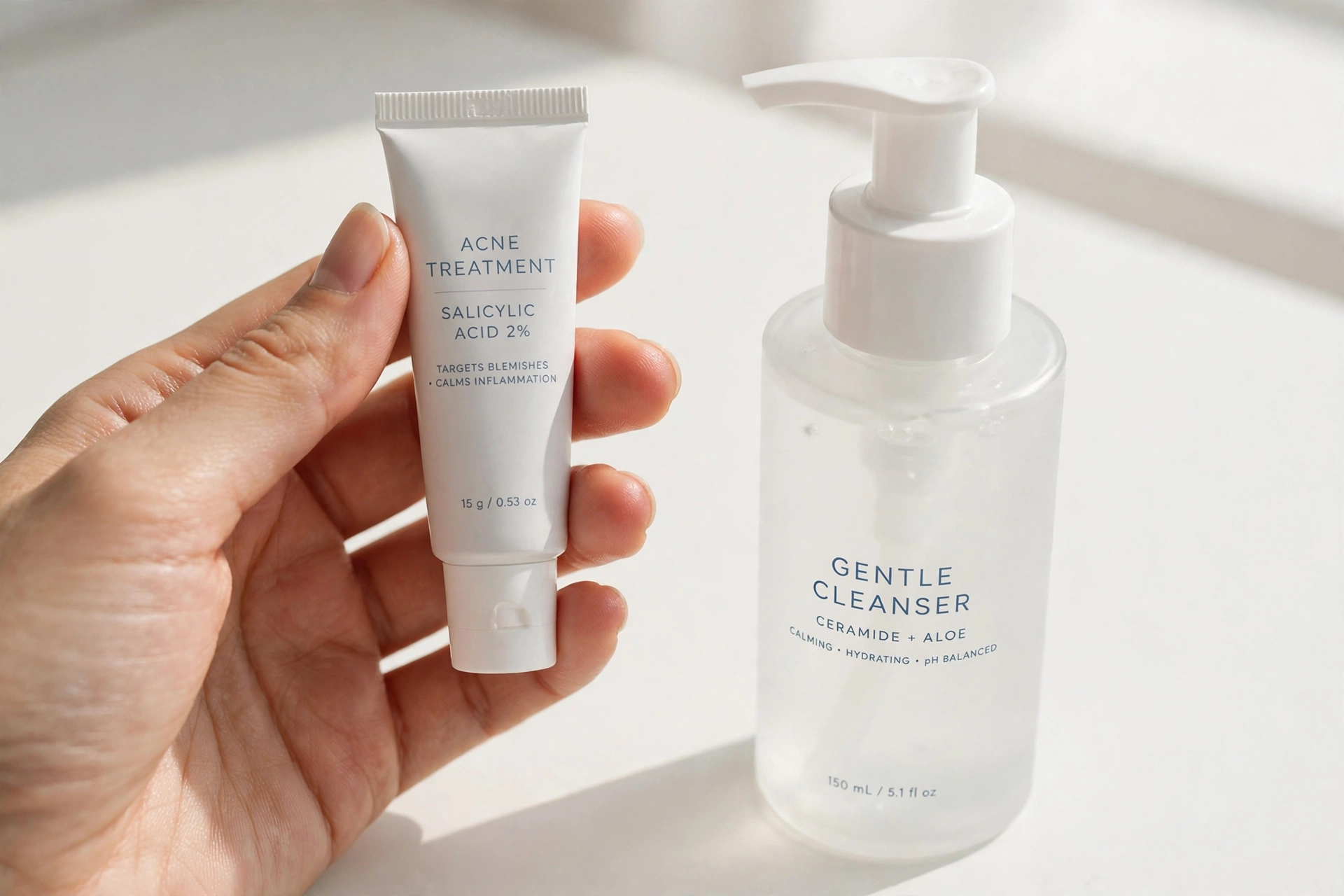
Acne happens when pores clog with oil and dead skin, and bacteria grow inside the clog. It is most common on oily and combination skin, but any skin type can break out.
By skin type:
- Oily skin: Use a foaming cleanser, a BHA (salicylic acid) 2 percent product 2 to 3 times a week, a light gel moisturizer, and a matte sunscreen. Niacinamide helps control oil and calm redness.
- Dry skin: Use a gentle cream cleanser, a BHA only 1 to 2 times a week, and a rich moisturizer. Do not use harsh acne washes. They strip your skin and make breakouts worse. Adapalene gel, about $14.99 for a tube, is a proven drugstore treatment for acne. Use a pea sized amount at night.
- Combination skin: Use a gentle cleanser, BHA on the T-zone only, and a light moisturizer. Treat breakouts where they happen, not on the whole face.
- Sensitive skin: Skip strong acids. Use a gentle cleanser, niacinamide, and a simple moisturizer. If acne is persistent, see a dermatologist. Azelaic acid is a gentler option that calms redness and fights breakouts.
What not to do: Do not pick or squeeze pimples. It pushes bacteria deeper, causes scarring, and makes dark marks last longer. Do not use three acne products at once. One active is enough to start.
When to see a dermatologist: If acne is severe, painful, or cystic, or if it does not improve after 8 weeks of a steady routine. The American Academy of Dermatology notes that acne products need 6 to 8 weeks to show results, so give your routine time first. A dermatologist can prescribe stronger treatments that drugstore products cannot match.
Dark Spots and Hyperpigmentation

Dark spots come from extra melanin, the pigment that gives skin its color. Sun damage causes most dark spots. Acne can also leave dark marks, called post inflammatory hyperpigmentation. These marks are common on medium and deep skin tones and can last for months.
The fix:
- Sunscreen every day. This is the most important step. Sun makes dark spots darker and stops them from fading. No brightening product works without sunscreen.
- Vitamin C in the morning. It blocks extra melanin and brightens skin. Look for L-ascorbic acid at 10 to 20 percent. Our skincare ingredients guide explains which form to buy.
- Niacinamide. It slows the transfer of pigment to the skin surface. It works well with vitamin C.
- Azelaic acid. It fades dark spots and calms redness at the same time. It is safe for sensitive skin and safe during pregnancy. Ask your doctor first if you are pregnant.
By skin type:
- Oily skin: Vitamin C serum plus niacinamide, with a light gel moisturizer.
- Dry skin: Vitamin C serum plus a rich ceramide moisturizer. Avoid strong acids until spots start to fade.
- Sensitive skin: Azelaic acid and niacinamide. Skip strong vitamin C at first. Start with a gentler vitamin C form.
- Mature skin: Vitamin C in the morning, retinol at night. This pair is the strongest combination for dark spots and fine lines together.
Timeline: Dark spots fade in 8 to 12 weeks with daily sunscreen and a brightening active. Deep spots can take longer. Be patient and do not add a second strong active to speed it up. That usually causes irritation, which creates more dark marks.
Dull Skin
Dull skin looks flat, tired, and grey. It usually comes from dead skin cells building up on the surface, dehydration, or sun damage. It is the easiest concern to fix.
The fix:
- Gentle exfoliation. An AHA (glycolic or lactic acid) 2 to 3 times a week clears dead cells and lets light reflect off fresh skin.
- Hydration. Hyaluronic acid on damp skin, sealed with moisturizer, plumps skin right away.
- Vitamin C. It brightens tone over 3 to 4 weeks.
- Sunscreen. Sun damage is a top cause of dullness. Daily sunscreen stops it from getting worse.
By skin type:
- Oily skin: AHA 2 to 3 times a week, niacinamide daily, gel moisturizer.
- Dry skin: Lactic acid (the gentlest AHA) 2 times a week, hyaluronic acid daily, rich cream.
- Sensitive skin: Skip AHAs at first. Use hyaluronic acid and niacinamide only. Add lactic acid once a week if your skin stays calm.
- Mature skin: AHA plus vitamin C in the morning, retinol at night. This is the full brightening set.
Most people see a lift in 2 to 4 weeks. Our guide on how to get glowing skin covers the full glow system in detail.
Redness and Sensitivity
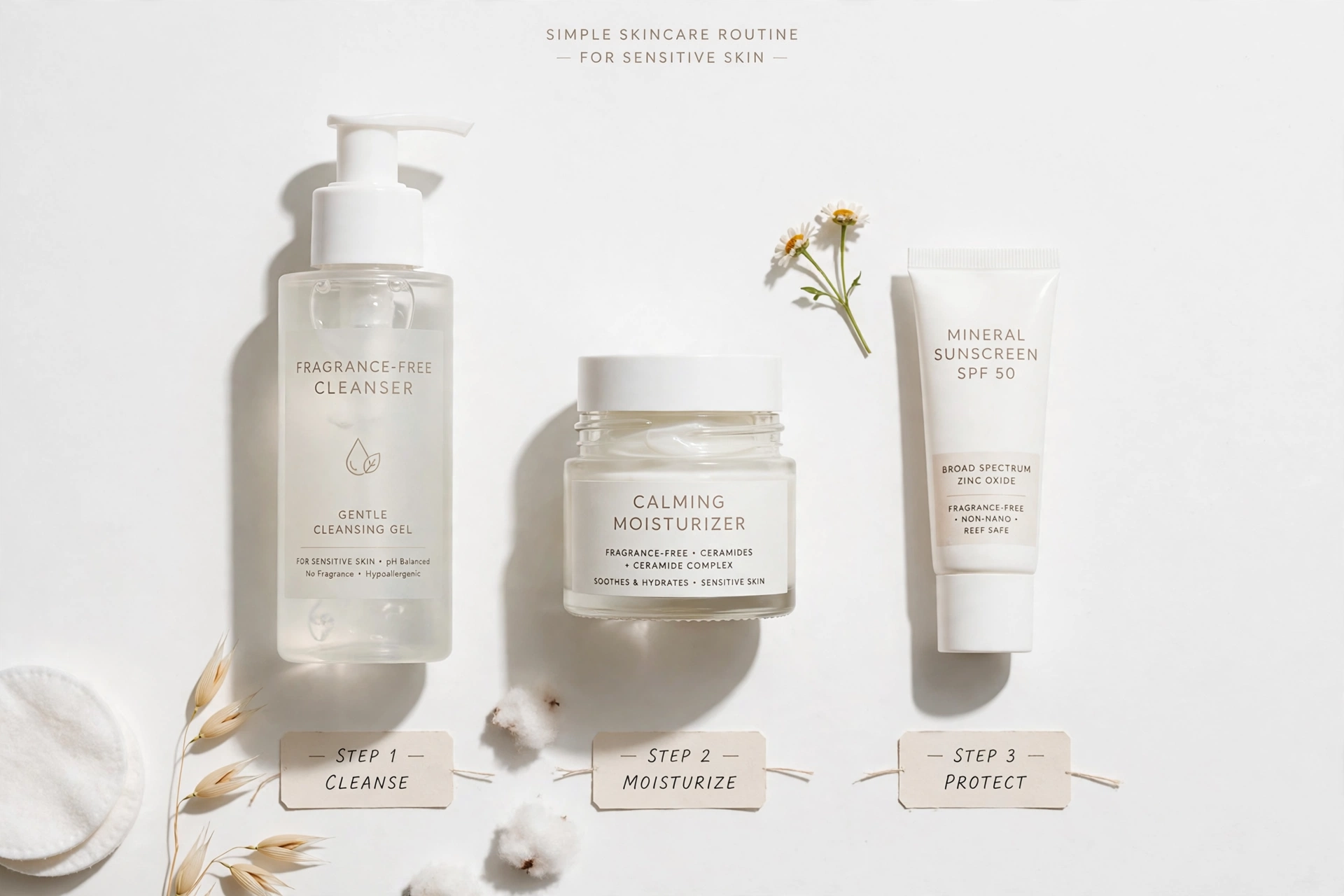
Redness comes from an irritated skin barrier, rosacea, or a reaction to a product. The skin looks flushed, feels warm, or stings when you apply products.
The fix:
- Simplify. Cut your routine to three steps: gentle cleanser, simple moisturizer, mineral sunscreen. Stop all actives for a week.
- Repair the barrier. Use a moisturizer with ceramides. CeraVe Moisturizing Cream, $15.99 at Target (Nov 2026), is a good option.
- Add azelaic acid. It calms redness and is safe for sensitive skin. Start once a day.
- Add niacinamide. It strengthens the barrier and reduces redness over 4 to 8 weeks.
By skin type:
- Sensitive skin: This is your main concern. Read the full sensitive skin guide for the complete safe routine.
- Dry skin: Rich ceramide cream plus azelaic acid. Avoid fragrance and strong acids.
- Oily skin: Redness on oily skin often comes from over exfoliation. Cut back to one exfoliant, 1 to 2 times a week, and add niacinamide.
- Combination skin: Use azelaic acid on red areas only. Keep the rest of the routine gentle.
What not to do: Do not use scrubs, strong acids, or retinol while your skin is red. Do not try a new product every day. Introduce one product at a time and wait a week.
When to see a dermatologist: If redness is severe, if you have rosacea, or if your skin blisters, swells, or burns after using a product. Rosacea needs medical care, not just skincare.
Fine Lines and Wrinkles
Fine lines come from collagen loss, sun damage, and dryness. They are a normal part of aging. Skincare can soften them, but no cream erases deep wrinkles.
The fix:
- Sunscreen every day. Sun damage causes most visible aging. Sunscreen is the best anti aging product that exists.
- Retinol at night. It speeds cell turnover and helps skin make collagen. Start 2 to 3 nights a week with a low strength. Full results take 8 to 12 weeks. Do not use retinol if you are pregnant.
- Vitamin C in the morning. It supports collagen and brightens skin.
- Peptides. They signal skin to make more collagen. They are gentle and work well with retinol.
- Hydration. Hyaluronic acid and a rich moisturizer plump fine lines right away.
By skin type:
- Mature skin: This is your main concern. Read the full mature skin guide for the complete routine.
- Dry skin: Retinol plus a rich cream with ceramides and squalane. Moisturizer matters as much as retinol here.
- Oily skin: Retinol plus a light gel moisturizer. Oily skin often shows fewer fine lines, but retinol still helps texture.
- Sensitive skin: Use bakuchiol instead of retinol. A 2019 study found it gave similar results with less irritation. Or use retinol once a week and build up very slowly.
Large Pores and Blackheads
Pores look large when they are full of oil or when skin loses firmness. You cannot shrink a pore permanently, but you can make it look smaller by keeping it clean and keeping skin firm.
The fix:
- BHA 2 to 3 times a week. Salicylic acid goes inside the pore and clears out oil. It is the best active for blackheads.
- Niacinamide daily. It helps control oil and makes pores look smaller over 6 to 12 weeks.
- Retinol at night. It keeps pores clear and firms skin over time.
- Clay mask once a week. It absorbs extra oil from the T-zone. Do not use it on dry cheeks.
By skin type:
- Oily skin: This is your main concern. BHA plus niacinamide is the core pair.
- Combination skin: BHA on the T-zone only. Niacinamide on the whole face.
- Dry skin: Use BHA once a week only. Focus on niacinamide and hydration instead.
- Sensitive skin: Skip BHA. Use niacinamide and a gentle cleanser. A clay mask is usually too harsh for sensitive skin.
Dry Patches and Flaking
Dry patches come from a weak skin barrier, cold weather, or over exfoliation. The skin feels rough, looks flaky, and can itch.
The fix:
- Stop exfoliating for a week. Let the barrier recover.
- Use a cream cleanser. Foaming cleansers can make dryness worse.
- Layer moisture. Hyaluronic acid on damp skin, then a rich ceramide cream, then a thin layer of a plain occlusive like petroleum jelly on very dry patches at night. This seals water in.
- Add squalane. A few drops mixed into your moisturizer add oil without clogging pores.
By skin type:
- Dry skin: This is your main concern. Read the full dry skin guide for the complete routine.
- Combination skin: Use a rich cream on dry patches only. Keep a light lotion on the rest of your face.
- Sensitive skin: Keep it simple. Fragrance free cream cleanser, ceramide cream, mineral sunscreen.
When to see a dermatologist: If dry patches crack, bleed, or do not improve after 4 weeks of gentle care, it may be eczema. A dermatologist can prescribe treatment.
How to Treat Two Concerns at Once
Most people have more than one concern. Acne plus dark spots is common. Dullness plus fine lines is common too. Here is how to combine treatments safely.
| First concern | Second concern | Safe pair |
|---|---|---|
| Acne | Dark spots | BHA at night, vitamin C in the morning, sunscreen daily |
| Dullness | Fine lines | Vitamin C in the morning, retinol at night |
| Redness | Dark spots | Azelaic acid plus niacinamide, sunscreen daily |
| Dryness | Fine lines | Hyaluronic acid, ceramides, retinol at night |
| Acne | Dullness | BHA 2 times a week, niacinamide daily |
The rule: one strong active per night. Morning is for vitamin C and sunscreen. Night is for one active: retinol, BHA, or AHA. Niacinamide and hyaluronic acid can go in both routines.
Frequently Asked Questions
What is the most common skin concern?
Acne and dullness are the most common. Most people deal with one or both at some point. Both respond well to a simple routine with one targeted active.
How do I get rid of dark spots?
Use vitamin C in the morning and sunscreen every day. Niacinamide and azelaic acid help too. Dark spots fade in 8 to 12 weeks. Sunscreen stops new ones from forming.
Why is my skin dull?
Dull skin usually comes from dead skin buildup, dehydration, or sun damage. Gentle exfoliation 2 to 3 times a week plus vitamin C and daily sunscreen bring back brightness.
Can I treat acne and dry skin at the same time?
Yes. Use a gentle cleanser, a light BHA 2 to 3 times a week, and a rich moisturizer. Do not use harsh acne products that strip your skin. Moisturizer is essential.
When should I see a dermatologist for a skin concern?
See a dermatologist if acne is severe or painful, if a rash or swelling appears, if a mole changes, or if a concern does not improve after 8 to 12 weeks of a steady routine.
Can I use retinol for fine lines if I have sensitive skin?
Start very slowly, 1 to 2 nights a week, with a low strength. Or use bakuchiol instead. Stop if your skin stays red or peeling after 2 weeks.
The Bottom Line
Fix the base routine first. Then add one active for your main concern. Give it 8 to 12 weeks. Sunscreen is part of every fix, because sun damage causes or worsens almost every concern on this page.
If you have two concerns, pair them safely using the table above. If a concern is severe, painful, or does not improve, see a dermatologist. Drugstore products handle most everyday concerns well, but some problems need medical care. Our drugstore dupes guide shows the cheapest way to buy the actives in this guide, and our skincare ingredients guide explains each active in full detail.
This article is general information only, not medical advice. If you have a skin condition, are pregnant, or take prescription skincare, talk to a dermatologist before changing your routine. Read our Disclaimer for the full details. If you have questions about this guide, reach out through our Contact Us page or see our frequently asked questions. Learn more about who we are on our About Us page. Some links on this site are affiliate links, which means we may earn a small commission at no extra cost to you. See our Affiliate Disclosure for details.
Sources and further reading
Cleveland Clinic guide to skincare ingredients
1 thought on “Skin Concerns by Skin Type: Fix Acne, Dark Spots, and Dullness”
Comments are closed.