
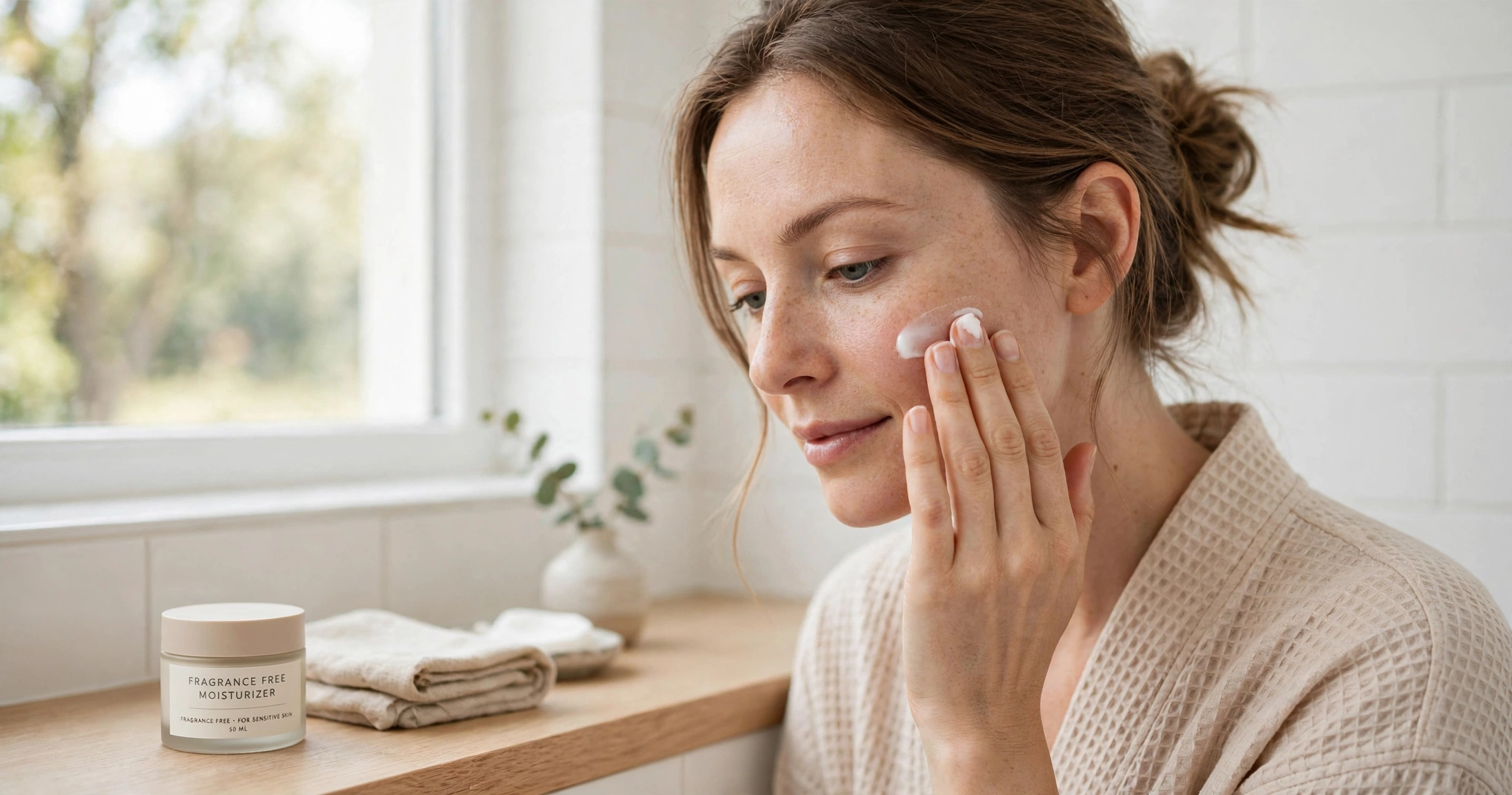
Sensitive skin reacts fast. A new product can cause redness, stinging, or itching within minutes. A strong active can leave your face raw for days. If this sounds familiar, you do not need a stronger routine. You need a simpler one.
This skincare routine for sensitive skin has three steps. It uses fragrance free products with short ingredient lists. It adds new products one at a time, with a patch test first. It works because it respects your skin barrier instead of fighting it.
The Short Answer
Use three steps: gentle fragrance free cleanser, simple ceramide moisturizer, mineral sunscreen. That is the whole routine. Add one active at a time, with a patch test first. Niacinamide and azelaic acid are the safest first actives. Avoid fragrance, strong acids, and retinol until your skin is calm and steady.
How to Know You Have Sensitive Skin
Wash your face with a gentle cleanser. Wait 30 minutes. If your skin turns red, feels itchy, or stings after washing, you have sensitive skin.
Sensitive skin also tends to have:
- Redness that comes and goes
- Stinging or burning when you apply products
- Reactions to fragrance, new products, or weather changes
- Dry patches and a tight feeling
- Flare ups after exfoliating or using strong actives
Sensitive skin is often dry too, but not always. It can be oily and sensitive at the same time. The key sign is reactivity, not oil level. Our guide on how to get glowing skin explains the skin type test in full.
The 3-Step Sensitive Skin Routine
Step 1: Gentle Fragrance Free Cleanser
Use a gentle, fragrance free cleanser morning and night. It should feel like a lotion, not a soap. It should not foam a lot. It should not leave your skin tight.
Good options: Vanicream Gentle Facial Cleanser, around $10, or CeraVe Hydrating Facial Cleanser, about $16. Both are fragrance free and gentle.
Wash with lukewarm water, never hot. Massage for 30 seconds. Rinse. Pat dry with a clean towel. Never rub.
Step 2: Simple Ceramide Moisturizer
Use a simple moisturizer with ceramides. Ceramides repair the skin barrier. A strong barrier means less redness and less reactivity over time.
Good options: CeraVe Moisturizing Cream, $15.99 at Target (Nov 2026), or La Roche-Posay Toleriane Double Repair Face Moisturizer, $24.99 at Target (Nov 2026). Both are fragrance free. Use a pea sized amount morning and night. Bring it down to your neck too.
Step 3: Mineral Sunscreen (Morning Only)
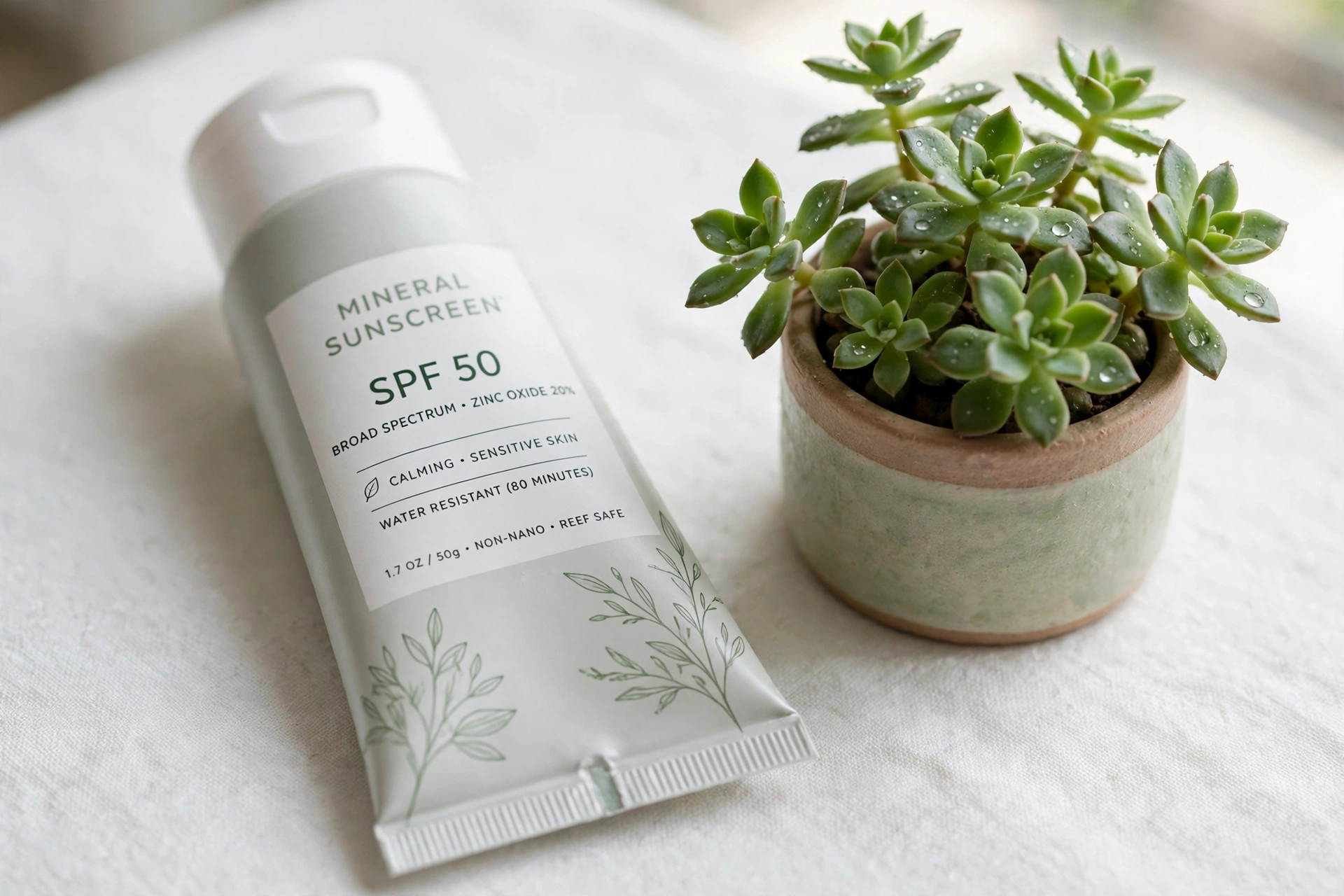
Mineral sunscreen is better for sensitive skin than chemical sunscreen. Mineral sunscreens use zinc oxide or titanium dioxide. They sit on top of skin and block UV rays. They are less likely to sting than chemical sunscreens, which absorb into skin.
Look for a mineral sunscreen labeled for sensitive skin, with SPF 30 or higher. Use about two finger lengths for your face and neck. Apply it as the last step in the morning.
Mineral sunscreen can leave a white cast, especially on deep skin tones. Look for a tinted mineral sunscreen if the white cast bothers you. A tinted formula blends better and still protects.
How to Patch Test: The Full Guide
A patch test tells you if a product will irritate your skin before you put it on your whole face. For sensitive skin, patch testing is not optional. It is the rule.
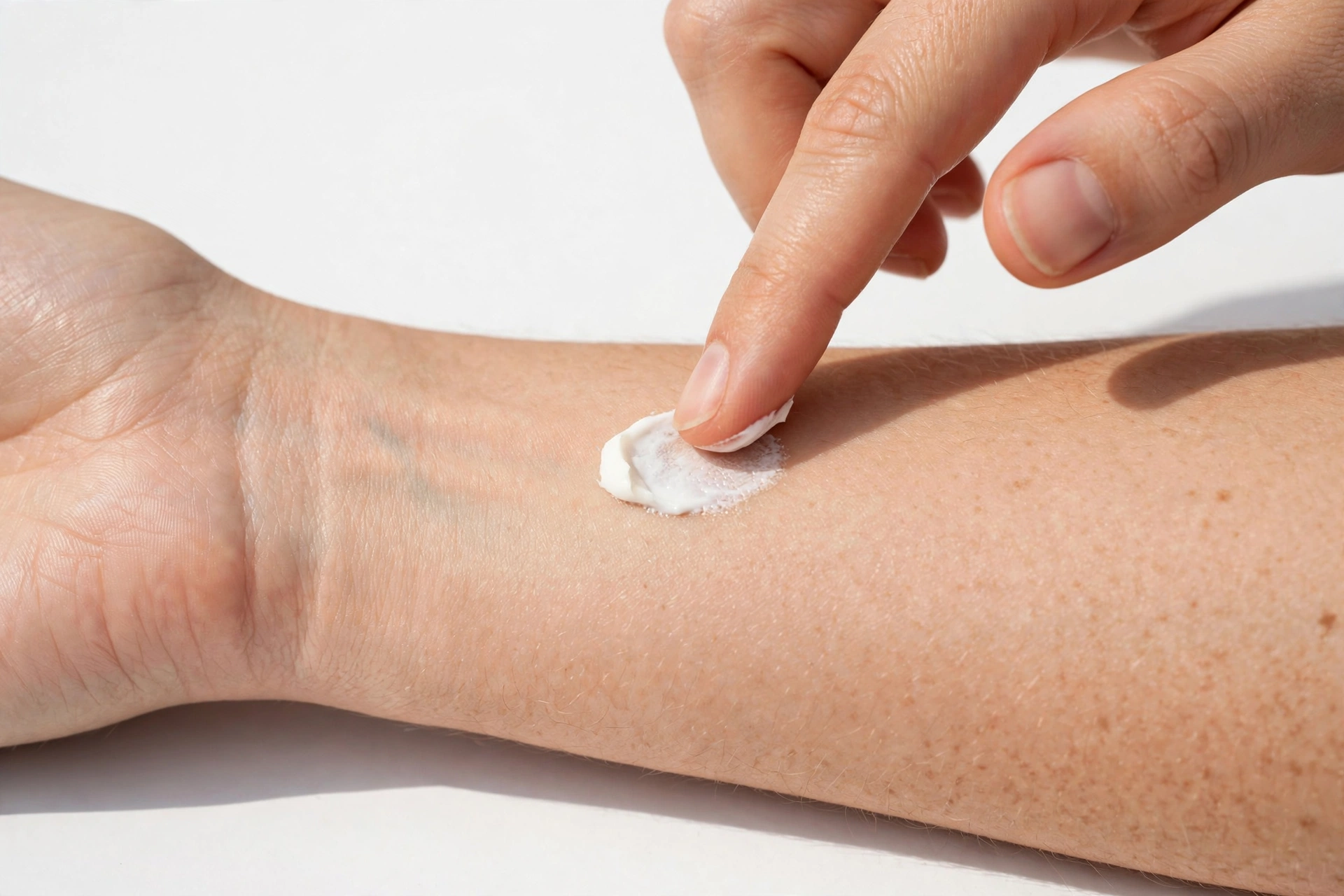
- Put a small amount on the inside of your arm or behind your ear.
- Wait 24 hours. For strong actives like retinol or acids, wait 48 hours.
- Check the area. If it stays calm, with no redness, itching, or swelling, the product is probably safe.
- Next, test it on a small area of your face, like the jawline. Wait another 24 hours.
- If the jawline stays calm, use the product on your whole face.
The one product at a time rule: Introduce only one new product per week. If your skin reacts, you will know which product caused it. If you add three products at once and your skin turns red, you will not know which one to blame.
Safe Actives for Sensitive Skin
Once your 3 step routine is steady for 2 weeks, you can add one active. Pick from this safe list.
| Active | What it does | How to start |
|---|---|---|
| Niacinamide 2 to 5% | Calms redness, strengthens the barrier, evens tone | Once a day, morning or night |
| Azelaic acid 10% | Calms redness, fades dark spots, helps acne | Once a day, at night |
| Hyaluronic acid | Hydrates without irritation | On damp skin, morning and night |
| Ceramides | Repair the barrier | In your moisturizer, already included |
| Bakuchiol | Gentle retinol alternative for lines and texture | 2 to 3 nights a week |
| Lactic acid (low strength) | Very gentle exfoliation | Once a week at night |
Niacinamide is the best first active for most sensitive skin. The Ordinary Niacinamide 10% + Zinc 1% costs around $6, but 10 percent can be strong for sensitive skin. Look for a 2 to 5 percent formula instead, or use the 10 percent serum every other day.
Azelaic acid is the best active for redness and dark spots on sensitive skin. It is safe during pregnancy too, but ask your doctor first if you are pregnant. Our skincare ingredients guide explains each of these actives in detail.
Ingredients to Avoid
| Ingredient | Why to avoid it |
|---|---|
| Fragrance and parfum | The most common cause of irritation in skincare |
| Essential oils | They sound natural, but they can irritate sensitive skin |
| Drying alcohol (alcohol denat) | Strips the barrier and causes stinging |
| Strong glycolic acid peels | Too harsh for sensitive skin |
| Retinol (at first) | Too strong until your barrier is steady. Try bakuchiol first. |
| Physical scrubs | Scratch the barrier and cause redness |
| High strength vitamin C (L-ascorbic acid 20%) | Can sting. Start with a gentler form at a lower strength. |
Fragrance free is not the same as unscented. Fragrance free means no fragrance was added to the product. Unscented means the product has no smell, but it may still have masking fragrance added to cover the smell of other ingredients. For sensitive skin, look for the words “fragrance free” on the label. Do not trust “unscented” alone.
Read the label every time. Brands change formulas. A product that was fragrance free last year may not be this year. Check the ingredient list before you buy, every time.
What to Do When Your Skin Flares Up
A flare up means your skin turns red, stings, or feels raw. It can happen after a new product, a strong active, sun exposure, or stress. Here is what to do.
- Stop all actives. Stop retinol, acids, vitamin C, and any new product. Go back to the 3 step routine only.
- Wash with lukewarm water. Use your gentle cleanser or just water for a day or two.
- Moisturize generously. Apply your ceramide cream twice a day. Add a thin layer of petroleum jelly on raw areas at night.
- Use mineral sunscreen. Keep using sunscreen in the morning. Sun makes a flare up worse.
- Wait a week. Give your skin 7 days of gentle care before you try anything new.
- Reintroduce slowly. When your skin is calm, add back one product at a time, with a patch test.
Stinging means stop. If a product stings for more than a minute after you apply it, wash it off. A little tingle from an active is normal. Stinging that lasts is not. Listen to your skin.
The Full Sensitive Skin Routine for Under $50
| Product | Price |
|---|---|
| Vanicream Gentle Facial Cleanser, 8 oz | around $10 |
| CeraVe Moisturizing Cream, 16 oz | $15.99 at Target (Nov 2026) |
| Mineral sunscreen SPF 30 or higher | about $12 to $15 |
| Total | about $38 to $41 |
Add niacinamide later if you want one active. The Ordinary Niacinamide 10% + Zinc 1% costs around $6. Or pick a 5 percent niacinamide serum for about $10 to $12. Total with a serum: about $44 to $53. Prices were checked in Nov 2026 and may change.
When to See a Dermatologist
See a dermatologist if you have:
- Redness that does not go away after 2 weeks of gentle care
- A rash, swelling, or blistering after using a product
- Rosacea, eczema, or psoriasis
- Skin that reacts to almost every product you try
- A concern that worries you
Rosacea, eczema, and contact dermatitis need medical care, not just skincare. A dermatologist can test for allergies, prescribe treatment, and rule out conditions that look like sensitivity but need different care.
Frequently Asked Questions
What is the best skincare routine for sensitive skin?
Three steps: gentle fragrance free cleanser, simple ceramide moisturizer, and mineral sunscreen. Add one active at a time, with a patch test first.
How do I patch test a new product?
Put a small amount on the inside of your arm or behind your ear. Wait 24 hours, or 48 hours for strong actives. If the area stays calm, use it on your face.
What is the difference between fragrance free and unscented?
Fragrance free means no fragrance was added. Unscented means the product has no smell, but it may still have masking fragrance. For sensitive skin, look for fragrance free on the label.
Is mineral sunscreen better for sensitive skin?
Yes, for most people. Mineral sunscreens use zinc oxide or titanium dioxide. They sit on top of skin and are less likely to sting than chemical sunscreens.
Can sensitive skin use retinol?
Most sensitive skin should avoid retinol at first. Use bakuchiol or azelaic acid instead. If you want to try retinol, start once a week with a very low strength and stop if your skin stays red.
What should I do if a product makes my skin sting?
Stop using it right away. Wash your face with lukewarm water and a gentle cleanser. Apply a simple ceramide moisturizer. Give your skin a week of gentle care before you try anything new.
The Bottom Line
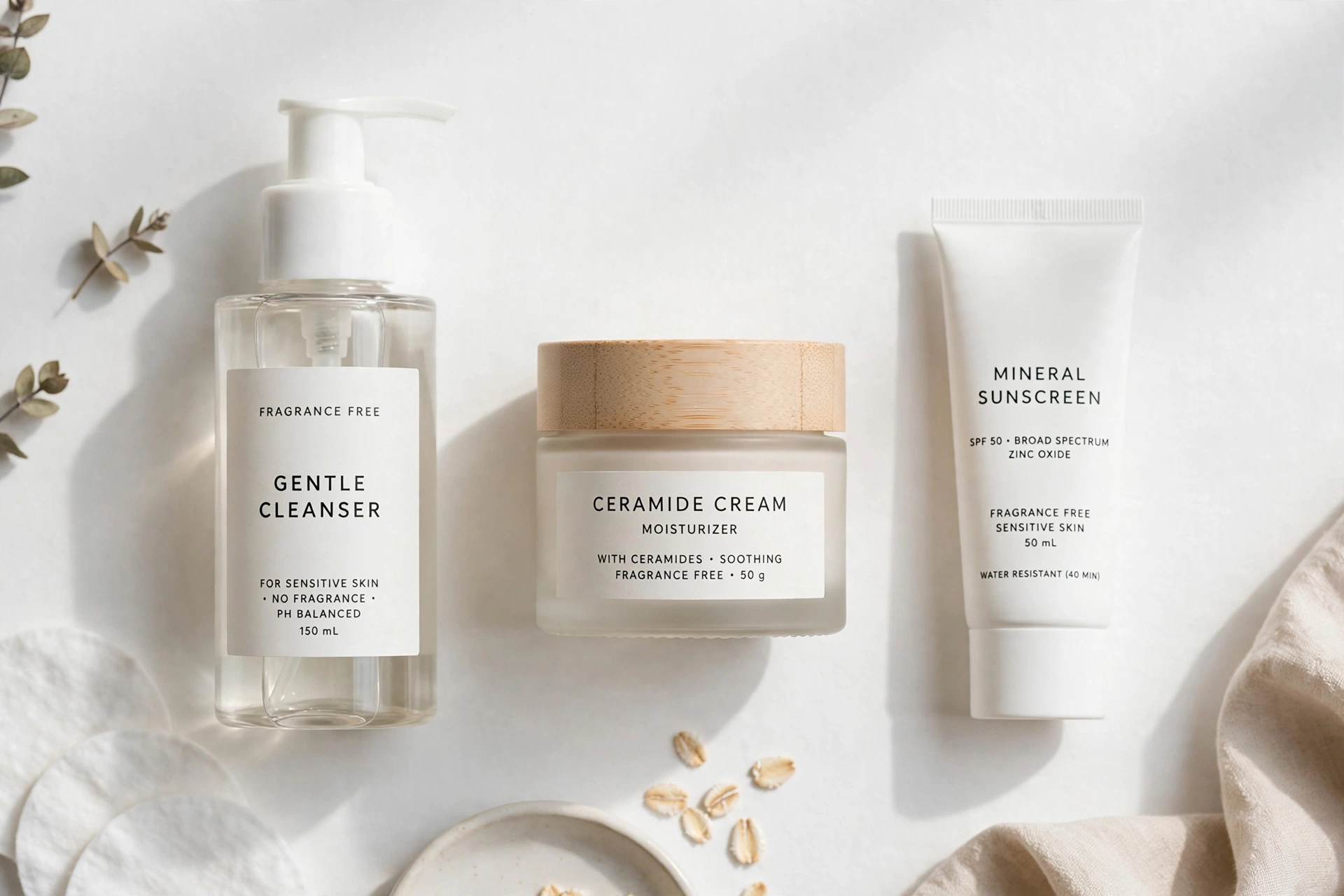
Sensitive skin needs less, not more. Three steps, fragrance free products, and a patch test for anything new. Build your barrier first with ceramides. Add niacinamide or azelaic acid later, one at a time. If your skin flares up, go back to the 3 step routine for a week.
If your skin is sensitive and dry, read our dry skin guide for extra hydration tips. If your main problem is redness, read our skin concerns guide. And if you are new to skincare, start with our beginner skincare routine guide to learn the basics first.
This article is general information only, not medical advice. If you have a skin condition, are pregnant, or take prescription skincare, talk to a dermatologist before changing your routine. Read our Disclaimer for the full details. If you have questions about this guide, reach out through our Contact Us page or see our frequently asked questions. Learn more about who we are on our About Us page. Some links on this site are affiliate links, which means we may earn a small commission at no extra cost to you. See our Affiliate Disclosure for details.
Sources and further reading
Cleveland Clinic guide to skincare ingredients