
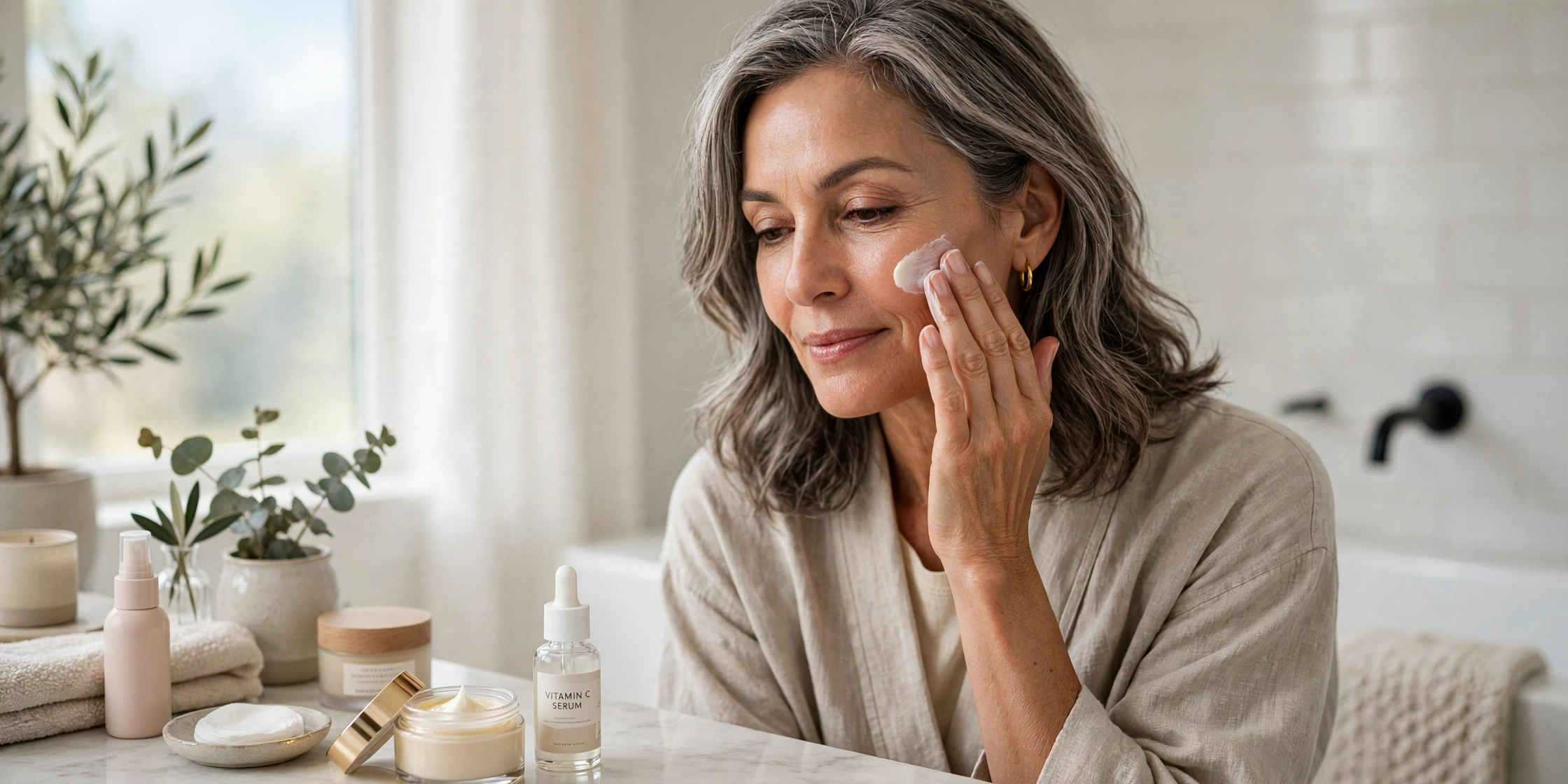
After 50, skin changes. It gets thinner and drier. It loses firmness. Fine lines deepen. Age spots appear. This is normal. It happens because skin makes less collagen and less oil as we age.
The good news is that skincare for mature skin over 50 responds to good care at any age. A simple routine with four proven ingredients, vitamin C, retinol, hyaluronic acid, and sunscreen, gives visible results in 8 to 12 weeks. You do not need a 10 step routine or a 200 dollar cream.
The Short Answer
Use a gentle cleanser, vitamin C in the morning, a rich ceramide moisturizer, and sunscreen every day. At night, use a gentle cleanser, retinol 2 to 3 times a week, and a rich moisturizer. Start retinol slowly with a pea sized amount. Give it 8 to 12 weeks. It is never too late to start.
How Skin Changes After 50
Three things change most after 50:
Collagen drops. Collagen is the protein that keeps skin firm. The American Academy of Dermatology notes that skin loses about 30 percent of its collagen in the first five years of menopause. Less collagen means less firmness and more fine lines.
Oil drops. Skin makes less oil with age. That is why mature skin feels dry and tight, even if it was oily when you were younger.
Cell turnover slows. Young skin renews itself in about 4 weeks. Mature skin takes longer. Dead cells build up, and skin looks dull.
These changes are normal. They are not a failure of your routine. The routine below works with these changes instead of fighting them.
The Four Pillars of Mature Skin Care
1. Sunscreen
Sunscreen is the most important product for mature skin. Sun damage causes most age spots, wrinkles, and loss of firmness. Sunscreen stops new damage and lets your other products work.
Use a broad spectrum sunscreen with SPF 30 or higher every morning, even on cloudy days. Use about two finger lengths for your face and neck. Reapply every 2 hours if you are outside.
La Roche-Posay Anthelios sunscreen costs about $20 to $22. It is a good option for mature skin because it feels light and does not dry skin out.
2. Vitamin C
Vitamin C brightens skin, fades age spots, and helps your skin make collagen. It is the best daytime active for mature skin.
Use it in the morning, after cleansing and before moisturizer. Look for L-ascorbic acid at 10 to 20 percent. The Cleveland Clinic guide to skincare ingredients notes that L-ascorbic acid is the only useful form of vitamin C in topical products. If L-ascorbic acid stings your skin, try a gentler form like ascorbyl glucoside.
3. Retinol
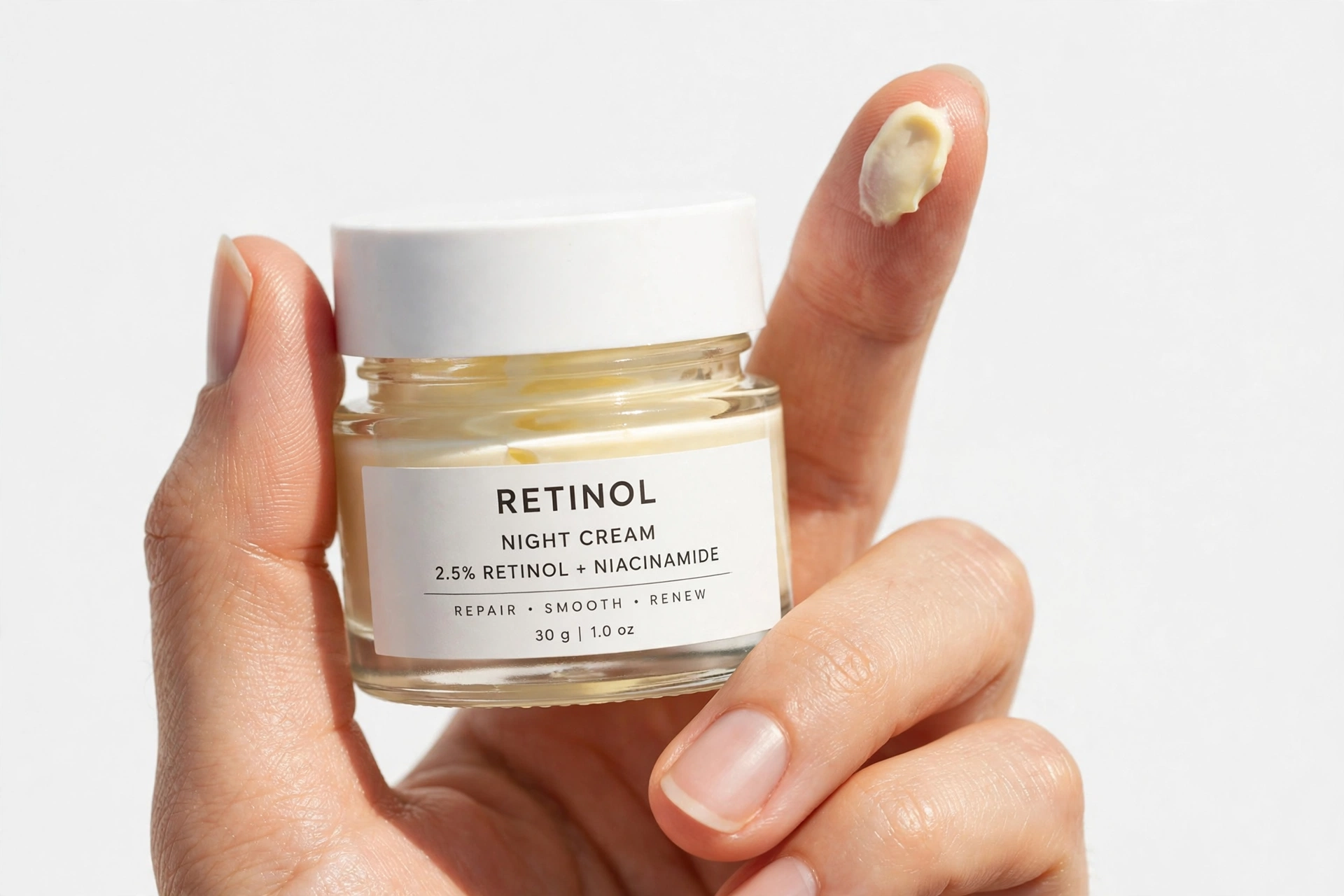
Retinol speeds cell turnover and helps skin make collagen. It is the most proven anti aging ingredient in skincare. It smooths fine lines, fades age spots, and improves texture.
Use it at night only. Start with a low strength, 0.25 to 0.5 percent. Use a pea sized amount for your whole face. Start 2 to 3 nights a week. Increase slowly over a month.
How to start retinol safely:
- Week 1 to 2: 2 nights a week, pea sized amount, after moisturizer.
- Week 3 to 4: 3 nights a week, if your skin stays calm.
- Week 5 and later: Every other night, if your skin tolerates it. Some people never go beyond 3 nights a week, and that is fine.
The sandwich method: Apply moisturizer first, then retinol, then moisturizer again. This slows the retinol down and reduces dryness and peeling. Mature skin is often dry, so the sandwich method works well.
Watch out: Retinol can cause dryness, redness, and peeling in the first few weeks. This is normal and usually fades. Do not use retinol on the same night as a strong acid. Do not use retinol if you are pregnant. If retinol is too strong for you, bakuchiol is a gentler alternative. Our skincare ingredients guide explains both in detail.
4. Rich Moisturizer
Mature skin needs a rich cream, not a light lotion. A rich cream with ceramides repairs the skin barrier, locks in water, and makes skin feel soft and comfortable.
CeraVe Moisturizing Cream, $15.99 at Target (Nov 2026), is a proven drugstore option. It has three ceramides and hyaluronic acid. Olay Regenerist Micro-Sculpting Cream, about $25, is another good option. It has niacinamide and peptides.
The Morning Routine for Mature Skin
| Order | Product | Why |
|---|---|---|
| 1 | Gentle cream cleanser | Cleans without stripping dry skin |
| 2 | Vitamin C serum | Brightens, fades spots, supports collagen |
| 3 | Hyaluronic acid serum on damp skin | Adds water and plumps fine lines |
| 4 | Rich ceramide cream | Repairs the barrier and locks moisture in |
| 5 | Sunscreen SPF 30 or higher | Prevents new sun damage |
Step 1: Cleanser. Use a gentle cream cleanser with lukewarm water. CeraVe Hydrating Facial Cleanser, about $16, is a good option. Wash with lukewarm water, never hot.
Step 2: Vitamin C. Use 2 to 4 drops on your face and neck. Wait a minute before the next step.
Step 3: Hyaluronic acid. Apply it on damp skin, then seal it with moisturizer. It plumps fine lines right away.
Step 4: Rich cream. Use a generous amount. Bring it down to your neck and chest too. The neck and chest show age fast and are often forgotten.
Step 5: Sunscreen. Use about two finger lengths for your face and neck. Sunscreen is the last step in the morning.
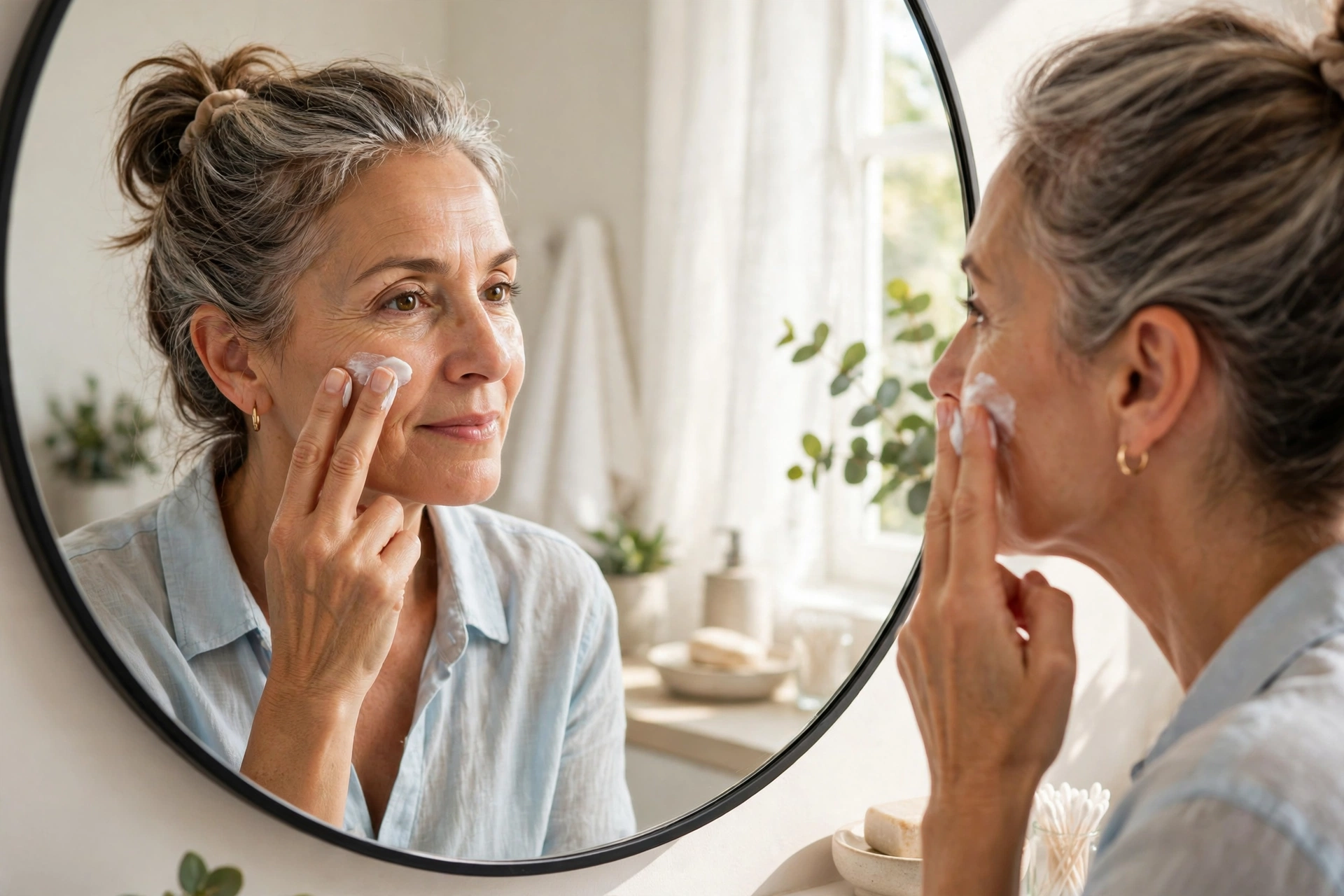
The Night Routine for Mature Skin
| Order | Product | Why |
|---|---|---|
| 1 | Gentle cream cleanser | Removes sunscreen and the day’s dirt |
| 2 | Retinol 2 to 3 nights a week | Speeds turnover, smooths lines, fades spots |
| 3 | Hyaluronic acid serum on damp skin | Adds water back into the skin |
| 4 | Rich ceramide cream | Repairs the barrier overnight |
Retinol nights: Use the sandwich method. Moisturizer, then retinol, then moisturizer. Start 2 nights a week.
Rest nights: On nights with no retinol, use hyaluronic acid and a rich cream. Your skin needs rest days to recover.
A sample week:
| Day | Night treatment |
|---|---|
| Monday | Retinol |
| Tuesday | Rest |
| Wednesday | Retinol |
| Thursday | Rest |
| Friday | Retinol |
| Saturday | Rest |
| Sunday | Rest or gentle lactic acid, if your skin feels good |
Age Spots: How to Fade Them
Age spots, also called sun spots or liver spots, come from sun damage over many years. They are flat, brown spots on the face, hands, and chest.
The fix:
- Sunscreen every day. This is the most important step. Sun makes age spots darker and stops them from fading.
- Vitamin C in the morning. It blocks extra melanin and brightens skin over 8 to 12 weeks.
- Retinol at night. It speeds cell turnover and fades spots over time.
- Niacinamide. It slows the transfer of pigment to the skin surface. It works well with vitamin C.
Timeline: Age spots fade in 8 to 12 weeks with daily sunscreen and a brightening active. Deep spots can take longer. Be patient and do not add a second strong active to speed it up. That usually causes irritation.
When to see a dermatologist: If a spot changes shape, color, or size, if it bleeds, itches, or looks different from your other spots, see a dermatologist right away. Some spots need to be checked for skin cancer. The American Academy of Dermatology recommends regular skin checks, especially after 50.
Fine Lines, Wrinkles, and Firmness
No cream erases deep wrinkles. But the right routine softens fine lines and improves firmness over time.
- Retinol is the strongest proven ingredient for lines. Give it 8 to 12 weeks.
- Vitamin C supports collagen and brightens skin.
- Peptides signal skin to make more collagen. They are gentle and work well with retinol.
- Hyaluronic acid plumps fine lines right away by adding water to the skin.
- Sunscreen stops new lines from forming. It is the best anti aging product that exists.
What does not work: Expensive creams that promise to erase wrinkles in a week. No cream does that. Real change takes 8 to 12 weeks. If a product promises instant results, be skeptical.
The Neck and Hands
The neck and hands show age fast, and they are often forgotten. Bring your routine down to your neck every day. Use the same cleanser, vitamin C, moisturizer, and sunscreen on your neck and chest.
For your hands, use a rich hand cream with ceramides and sunscreen during the day. Age spots on the hands respond to the same treatment as the face: vitamin C, retinol, and sunscreen.
The Full Mature Skin Routine for Under $60
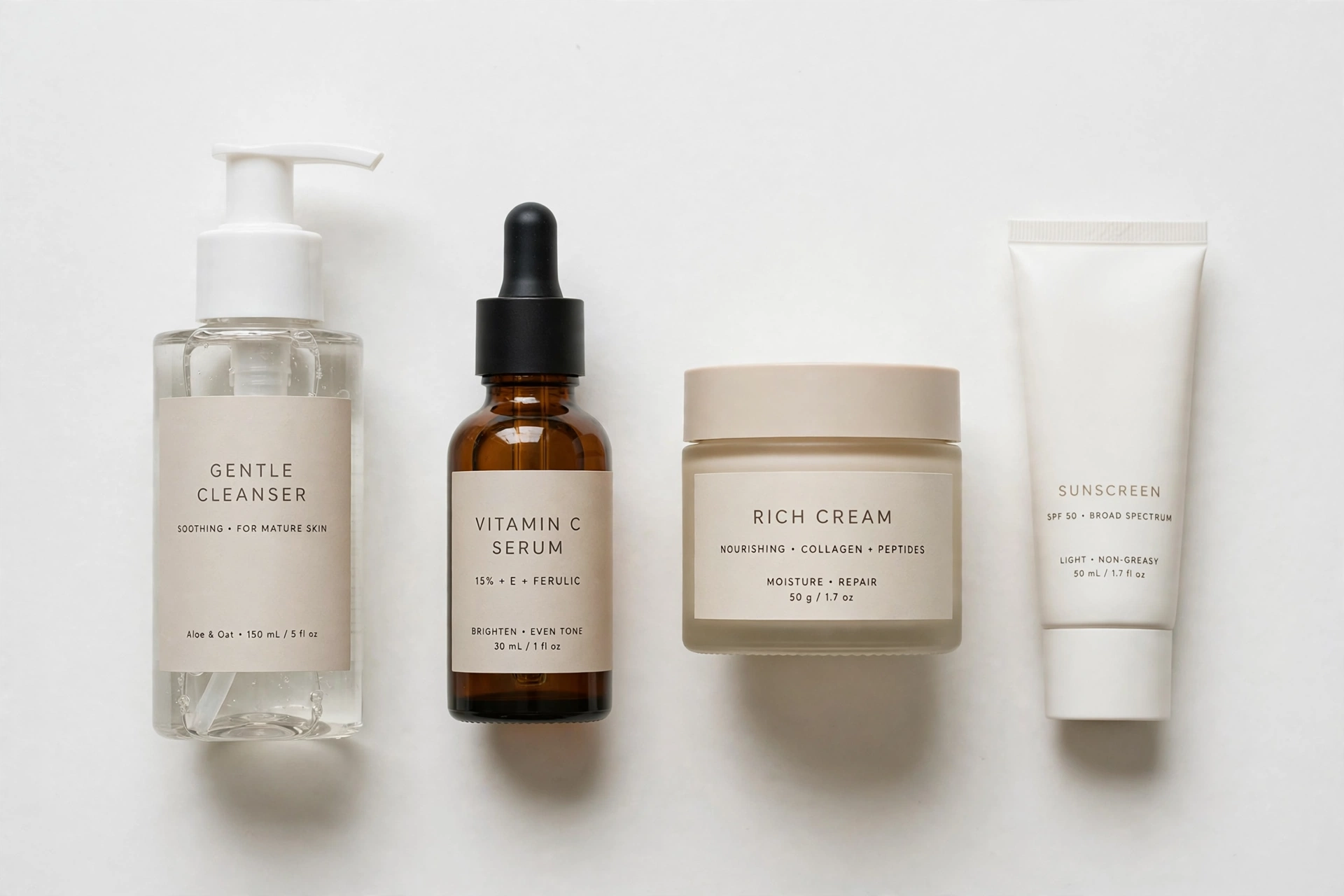
| Product | Price |
|---|---|
| CeraVe Hydrating Facial Cleanser, 16 oz | about $16 |
| The Ordinary Retinol 0.5% in Squalane, 30 ml | about $7 |
| CeraVe Moisturizing Cream, 16 oz | $15.99 at Target (Nov 2026) |
| La Roche-Posay Anthelios sunscreen | about $20 to $22 |
| Total | about $59 to $61 |
Add a vitamin C serum later if you want one. A good drugstore vitamin C serum costs about $15 to $25. Total with vitamin C: about $74 to $86. Start with the four products above, then add vitamin C in week 4. Prices were checked in Nov 2026 and may change.
Want a ready made retinol cream instead of a serum? RoC Retinol Correxion Deep Wrinkle Night Cream costs about $22. It is a proven formula that has been used for decades. Use it in place of The Ordinary retinol serum.
Frequently Asked Questions
What is the best skincare routine for mature skin over 50?
Gentle cleanser, vitamin C in the morning, rich ceramide moisturizer, and sunscreen every day. At night, gentle cleanser, retinol 2 to 3 times a week, and rich moisturizer.
How long does retinol take to work on mature skin?
First results in 4 to 6 weeks. Full results in 8 to 12 weeks. Be patient and use it consistently.
Can I use vitamin C and retinol together?
Yes, but not at the same time. Use vitamin C in the morning and retinol at night.
What causes age spots and how do I fade them?
Sun damage causes most age spots. Vitamin C in the morning and sunscreen every day fade them in 8 to 12 weeks. Sunscreen stops new ones from forming.
Is it too late to start skincare over 50?
No. Skin responds to good care at any age. Sunscreen, vitamin C, and retinol give visible results in 8 to 12 weeks, even if you start at 50, 60, or later.
Should mature skin use a rich cream or a light lotion?
A rich cream, in most cases. Mature skin is usually drier and thinner. A rich cream with ceramides repairs the barrier and locks in moisture.
The Bottom Line
Mature skin needs four things: sunscreen, vitamin C, retinol, and a rich moisturizer. Use vitamin C in the morning and retinol at night. Start retinol slowly with the sandwich method. Bring your routine down to your neck and hands. Give it 8 to 12 weeks.
It is never too late to start. Skin responds to good care at any age. If your skin is also dry, read our dry skin guide for extra hydration tips. If your skin is sensitive, read our sensitive skin guide before you add retinol. And if you are new to skincare, start with our beginner skincare routine guide to learn the basics first.
This article is general information only, not medical advice. If you have a skin condition, take prescription skincare, or have a spot that changes shape, color, or size, talk to a dermatologist. Read our Disclaimer for the full details. If you have questions about this guide, reach out through our Contact Us page or see our frequently asked questions. Learn more about who we are on our About Us page. Some links on this site are affiliate links, which means we may earn a small commission at no extra cost to you. See our Affiliate Disclosure for details.
Sources and further reading
Cleveland Clinic guide to skincare ingredients