
Combination skin is the most common skin type, and the most confusing. Your forehead, nose, and chin are oily. Your cheeks are normal or dry. One product fixes the T-zone and breaks the cheeks. Another product fixes the cheeks and makes the T-zone shine.
The solution is not two full routines. It is one gentle routine for the whole face, plus targeted treatment for each zone. This skincare routine for combination skin guide shows you how.
The Short Answer
Use one gentle routine for the whole face: gentle gel cleanser, niacinamide serum, light lotion, sunscreen. Then treat zones: BHA on the T-zone only, 2 to 3 times a week. Richer cream on dry cheeks only. That is the whole system.
How to Know You Have Combination Skin
Wash your face with a gentle cleanser. Wait 30 minutes. Do not put anything on it. If your forehead and nose look shiny, and a tissue picks up oil from the T-zone but not from the cheeks, you have combination skin.
The T-zone is the forehead, nose, and chin. It makes more oil than the rest of the face. A study found the forehead produces about 2.5 times more sebum than the cheek. That is why the T-zone shines first and breaks out more.
Combination skin also tends to have:
- Large pores on the nose
- Blackheads on the nose and chin
- Dry or tight cheeks, especially in winter
- Makeup that slides off the T-zone but looks dry on the cheeks
If your whole face is shiny, you have oily skin instead. If your whole face is tight and dry, you have dry skin instead. Our guide on how to get glowing skin explains the skin type test in full.
The Method: Shared Base, Targeted Treatment
Think of your routine in two layers.
Layer 1: the shared base. Four products used on the whole face, every day. These are gentle enough for both zones.
Layer 2: zone treatment. One or two extra steps, used only where they are needed. BHA on the T-zone. Rich cream on dry cheeks.

This method keeps your routine simple. You buy four base products, not eight. You treat each zone for what it needs, without over treating the other zone.
The Morning Routine for Combination Skin
| Order | Product | Where |
|---|---|---|
| 1 | Gentle gel cleanser | Whole face |
| 2 | Niacinamide serum | Whole face |
| 3 | Light lotion | Whole face |
| 4 | Richer cream (only if cheeks are dry) | Cheeks only |
| 5 | Light sunscreen SPF 30 or higher | Whole face |
Step 1: Cleanser. Use a gentle gel cleanser with lukewarm water. CeraVe Foaming Facial Cleanser, $16.19 at Target (Nov 2026), works well. It cleans the oily T-zone without stripping the cheeks. Avoid harsh foaming washes. They dry the cheeks out and trigger more oil on the T-zone.
Step 2: Niacinamide serum. Use 2 to 4 drops on your whole face. Niacinamide is the best single active for combination skin. It helps control oil on the T-zone, calms redness, and strengthens the barrier on dry cheeks. The Ordinary Niacinamide 10% + Zinc 1% costs around $6. If 10 percent stings, use it every other day or pick a 5 percent formula.
Step 3: Light lotion. Use a pea sized amount on the whole face. Neutrogena Hydro Boost Water Gel, $19.99 at Target (Nov 2026), is a good option. It hydrates without adding oil to the T-zone or leaving the cheeks dry.
Step 4: Richer cream on cheeks only. If your cheeks feel tight or dry, add a small amount of a richer cream on the cheeks only. CeraVe Moisturizing Cream, $15.99 at Target (Nov 2026), works well. Do not put it on the T-zone. It is too heavy there and can clog pores.
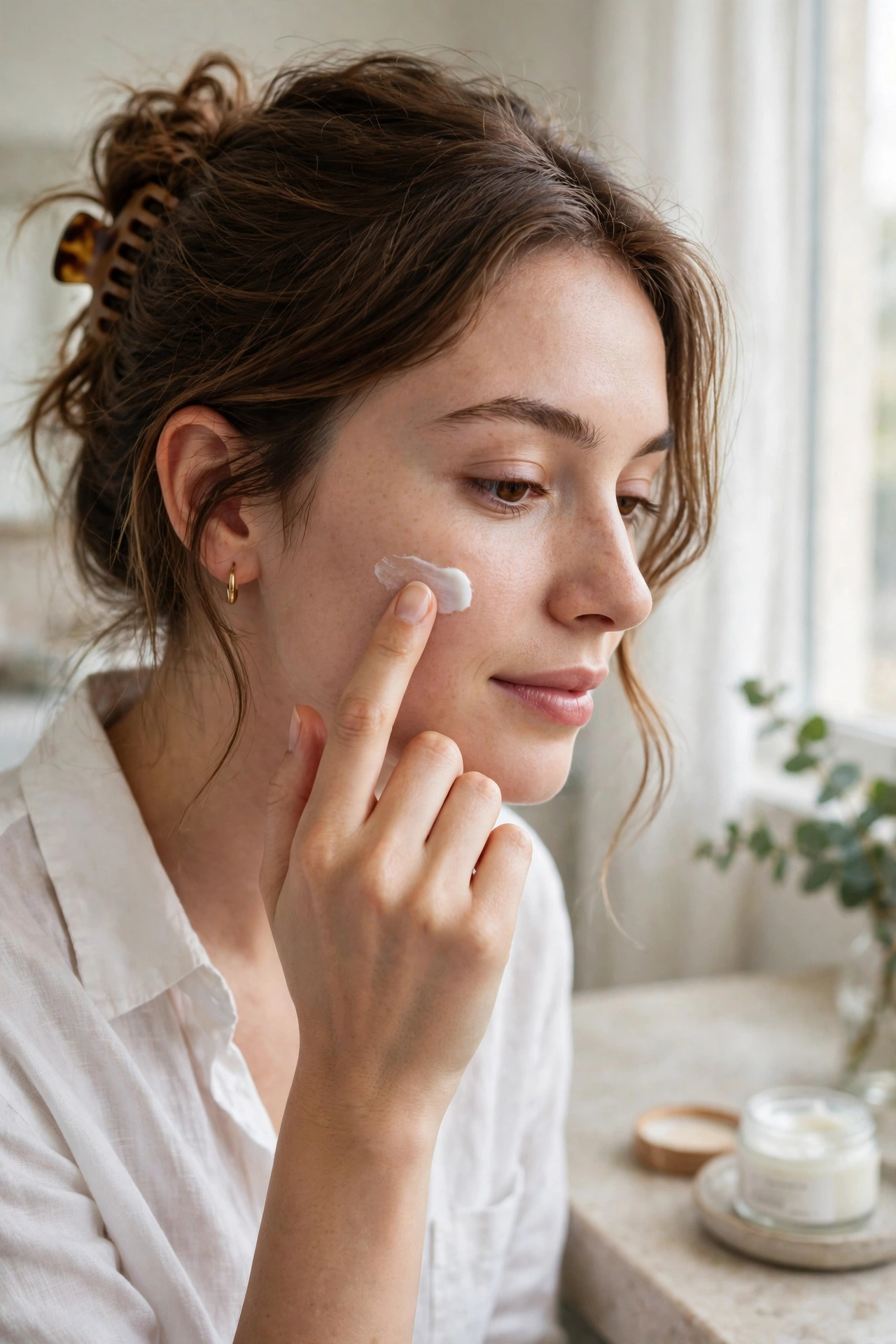
Step 5: Sunscreen. Use about two finger lengths for your face and neck. Pick a light, oil free sunscreen that dries down matte on the T-zone but does not dry out the cheeks. Neutrogena Ultra Sheer Dry-Touch Sunscreen SPF 55, about $10 to $11, is a good option.
The Night Routine for Combination Skin
| Order | Product | Where |
|---|---|---|
| 1 | Gentle gel cleanser | Whole face |
| 2 | BHA 2 to 3 times a week | T-zone only |
| 3 | Niacinamide serum (on rest nights) | Whole face |
| 4 | Light lotion | Whole face |
| 5 | Richer cream (only if cheeks are dry) | Cheeks only |
BHA on the T-zone only. A 2 percent salicylic acid product goes inside the pore and clears out oil. It is the best exfoliant for blackheads on the nose and chin. Use it 2 to 3 times a week at night, on the T-zone only. Do not put it on dry cheeks. It can cause dryness and irritation there.
Retinol, if you want it. Retinol helps with texture and fine lines. Use it on the whole face 2 nights a week, or on the T-zone only if your cheeks are sensitive. Start with a low strength. Do not use retinol on the same night as BHA. Do not use retinol if you are pregnant. Our skincare ingredients guide explains how to start retinol safely.
A sample week:
| Day | Night treatment |
|---|---|
| Monday | BHA on T-zone |
| Tuesday | Retinol on whole face (or rest) |
| Wednesday | Rest (niacinamide only) |
| Thursday | BHA on T-zone |
| Friday | Retinol on whole face (or rest) |
| Saturday | Rest (niacinamide only) |
| Sunday | BHA on T-zone or rest, depending on how your skin feels |
Multi Masking: One Extra Step
Multi masking means using a different mask on each zone at the same time. It is optional, but it works well for combination skin.
- Clay mask on the T-zone. It absorbs extra oil. Use it once a week for 10 minutes.
- Hydrating mask on the cheeks. It adds moisture to dry cheeks. Use it at the same time as the clay mask.
Do not use a clay mask on your cheeks. It will dry them out. Do not use a clay mask more than once a week.
How to Handle Seasonal Changes
Combination skin changes with the seasons. Many people are oilier in summer and drier in winter.
In summer: Blot the T-zone with blotting paper during the day. Use the light lotion only. Skip the richer cream on the cheeks unless they feel tight.
In winter: Use the richer cream on the cheeks every day. Add a few drops of squalane to the cream if cheeks still feel dry. Keep the BHA at 2 times a week, not 3. Cold air makes cheeks more sensitive.
In spring and fall: Adjust week by week. Watch how your skin feels, not the calendar.
Products to Avoid
- Harsh cleansers. They strip the cheeks and trigger more oil on the T-zone.
- Heavy creams on the whole face. They clog the T-zone. Use them on the cheeks only.
- Strong acids on the whole face. BHA and AHA belong on the T-zone only, or on the whole face at low strength and low frequency.
- Alcohol based toners. They dry the cheeks out fast.
- Two full routines. You do not need a separate oily routine and a separate dry routine. One shared base plus zone treatment is enough.
The Full Combination Skin Routine for Under $50
| Product | Price |
|---|---|
| CeraVe Foaming Facial Cleanser, 16 oz | $16.19 at Target (Nov 2026) |
| The Ordinary Niacinamide 10% + Zinc 1%, 30 ml | around $6 |
| Neutrogena Hydro Boost Water Gel, 1.7 oz | $19.99 at Target (Nov 2026) |
| Neutrogena Ultra Sheer Dry-Touch Sunscreen SPF 55 | about $10 to $11 |
| Total | about $52 to $53 |

That is slightly over $50. Swap the Hydro Boost gel for La Roche-Posay Toleriane Double Repair Face Moisturizer, $24.99 at Target (Nov 2026), and the total is about $57. Or swap it for CeraVe PM Facial Moisturizing Lotion, about $12, and the total drops to about $44 to $45. Add a small tub of CeraVe Moisturizing Cream, $15.99, later if your cheeks need a richer cream. Prices were checked in Nov 2026 and may change.
Add a BHA product later if you want one. A 2 percent BHA liquid costs about $10 to $14 at most drugstores.
When to See a Dermatologist
See a dermatologist if you have:
- Breakouts on the T-zone that do not improve after 8 weeks
- Dry patches on the cheeks that crack or do not improve after 4 weeks
- A rash, swelling, or blistering after using a product
- A concern that does not fit the combination pattern, like redness all over the face
A dermatologist can check whether you have combination skin or a condition like seborrheic dermatitis or rosacea, which need different care.
Frequently Asked Questions
What is the best skincare routine for combination skin?
One gentle routine for the whole face, plus zone treatment. Use a gentle gel cleanser, niacinamide on the whole face, BHA on the T-zone only, light lotion everywhere, and richer cream on dry cheeks.
How do I know if I have combination skin?
Wash your face and wait 30 minutes. If your forehead and nose are shiny but your cheeks are normal or dry, you have combination skin.
Should combination skin use two different moisturizers?
You can, but you do not have to. One light lotion works for the whole face. Add a richer cream only on dry cheeks if they need it.
Can I use BHA on my whole face if I have combination skin?
It is better to use BHA on the T-zone only. BHA on dry cheeks can cause dryness and irritation. Treat each zone for what it needs.
What sunscreen is best for combination skin?
A light, oil free sunscreen that dries down matte on the T-zone but does not dry out the cheeks. A gel or light lotion sunscreen works well.
Does combination skin change with the seasons?
Yes. Many people are oilier in summer and drier in winter. In winter, use a richer cream on the cheeks. In summer, blot the T-zone more often.
The Bottom Line
Combination skin needs one gentle routine and two targeted tweaks. Cleanse, niacinamide, light lotion, sunscreen on the whole face. BHA on the T-zone only. Richer cream on dry cheeks only. That is the whole system.
If your whole face is shiny, read our oily skin guide instead. If your whole face is dry, read our dry skin guide. And if you are new to skincare, start with our beginner skincare routine guide to learn the basics first.
This article is general information only, not medical advice. If you have a skin condition, are pregnant, or take prescription skincare, talk to a dermatologist before changing your routine. Read our Disclaimer for the full details. If you have questions about this guide, reach out through our Contact Us page or see our frequently asked questions. Learn more about who we are on our About Us page. Some links on this site are affiliate links, which means we may earn a small commission at no extra cost to you. See our Affiliate Disclosure for details.