

Quick Answer
Glass skin routine for dry skin means layering water, then sealing it in with a rich cream. Wash with a cream cleanser, pat on a hydrating toner, apply a hyaluronic acid serum on damp skin, follow with a rich moisturizer that contains ceramides, and finish with a hydrating sunscreen every morning. Exfoliate gently one to two times a week. Dry skin often shows the biggest glass skin change, because hydration fills in the dull, rough patches. For the full glow system by skin type, see our guide on how to get glowing skin.
Why Dry Skin Needs a Different Glass Routine
Dry skin lacks both water and oil. That combination makes it look dull, feel tight, and show fine lines more clearly. The surface is often rough, so light scatters instead of reflecting. That is the opposite of glass skin, which needs a smooth, wet looking surface.
The fix is not one heavy cream. A single rich cream can feel comforting, but it cannot replace the water layers underneath. Glass skin for dry skin is built in two parts: add water in thin layers, then seal it in so it does not escape. The water layers are toner and serum. The seal is the moisturizer. Skip either part and the glow fades by midday.
Dry skin also has a weaker barrier more often than other types. The barrier is the outer layer that keeps water in and irritants out. When it is weak, water escapes fast and the skin feels tight again within hours. Ceramides help repair that barrier. They are fats that occur naturally in skin, and a cream that contains them supports the barrier while it seals in moisture. That is why the moisturizer step matters as much as the serum step for dry skin.
The Dry Skin Glass Routine, Step by Step
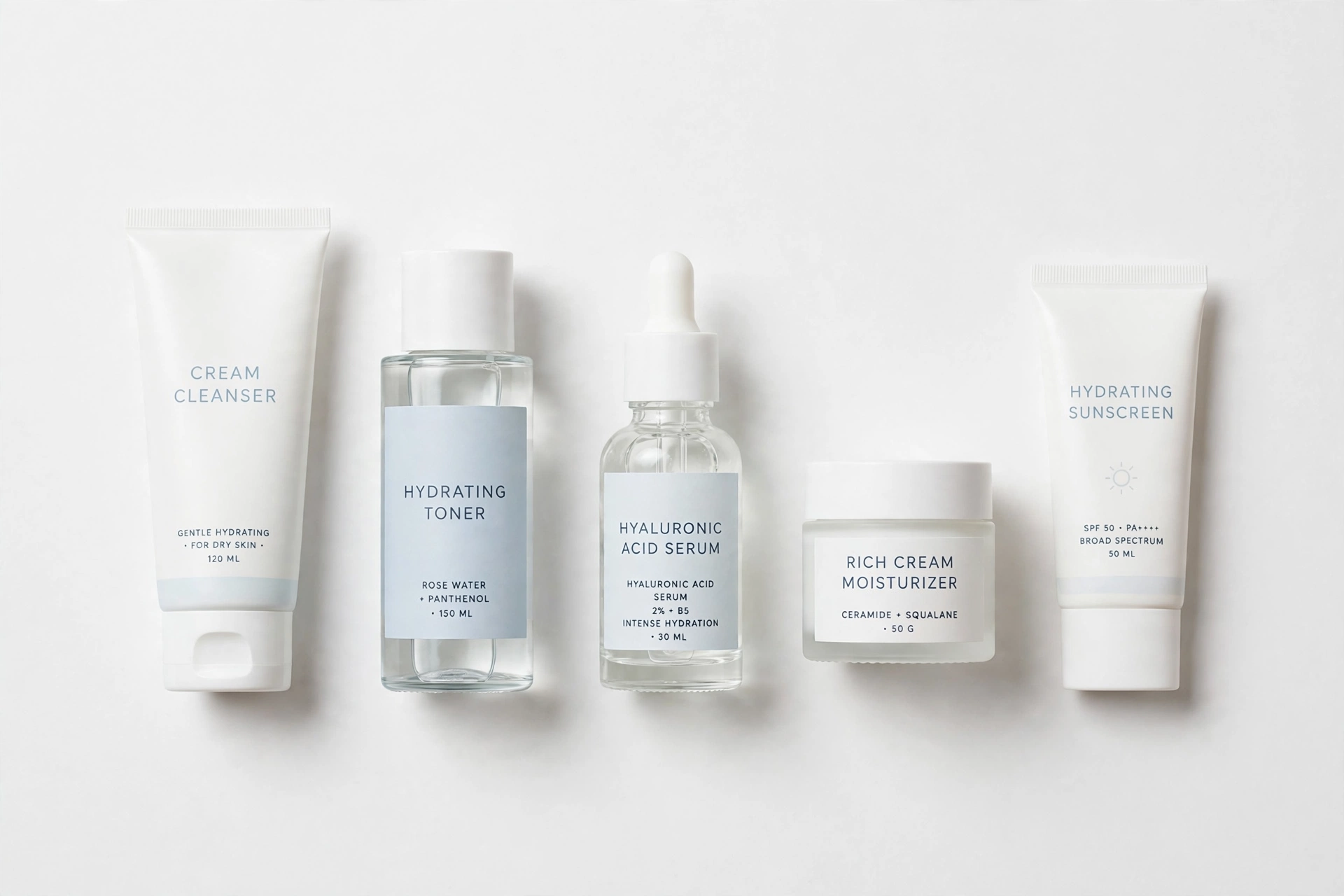
Every step adds hydration or locks it in. Nothing here is harsh. Dry skin does not need strong actives to glow. It needs steady moisture and a healthy barrier.
Step 1: Cream cleanser, morning and night. Use a gentle cream or lotion cleanser. It should feel soft, not foamy, and your skin should not feel tight after washing. Wash with lukewarm water, never hot. Hot water strips the natural oils that dry skin cannot spare. Wash for about 30 seconds, rinse, and pat dry with a soft towel. Do not rub. If you wear makeup, remove it first with a gentle cleansing balm or micellar water, then wash.
Step 2: Hydrating toner. This is the first water layer, and for dry skin it is one of the most important steps. Pat the toner on with your hands while the skin is still slightly damp from washing. You can apply it twice, in two thin layers, if your skin drinks it up fast. That is fine as long as each layer is light. Wait a few seconds between layers until the skin feels slightly tacky.
Step 3: Hyaluronic acid serum on damp skin. Hyaluronic acid pulls water into the skin, but it needs water to work with. Apply it while the skin is still damp from the toner. Use two or three drops for the whole face. A pea sized amount is enough. If you apply it on dry skin in a dry room, it can pull water out of the skin instead, which is the opposite of what you want. Damp skin first, serum second, moisturizer third. That order is the whole trick.
Step 4: Treatment, only if you need one. For dry skin, the best treatment is usually a gentle brightener. A vitamin C derivative can help dullness, and a low strength niacinamide serum at 2 to 5 percent can calm redness and support the barrier. Pick one, not both, and use it after the serum. If your skin stings or turns red, stop the treatment and go back to the simple steps for a week. Dry skin reacts faster than other types, so introduce anything new slowly.
Step 5: Rich moisturizer with ceramides. This is the seal. Use a rich cream that contains ceramides and feels comforting, not greasy. Apply it while the serum is still slightly damp so it locks the water in. Your skin should feel soft and comfortable an hour later. If it feels tight again, the cream is too light, or you skipped the toner step. A cream in a jar is usually richer than a lotion in a pump, and dry skin often does better with the richer texture.
Step 6: Hydrating sunscreen in the morning. Sunscreen protects the glow from sun damage, which causes roughness and dark spots. For dry skin, pick a hydrating sunscreen with SPF 30 or higher. Cream sunscreens and lotion sunscreens usually feel better than gels on dry skin. Reapply if you spend the day outside. At night, skip sunscreen and let the moisturizer be the last step.
A thin layer of facial oil can be added at night as a final seal, after the moisturizer. It is optional, not required. If you use one, keep it to two or three drops, pressed gently onto the skin. Oil on top of a good cream helps on very dry days and in winter, but it is not a substitute for the water layers below.
What the Routine Costs
The core products are all available at drugstores, and the routine does not need luxury prices. As a planning example, the prices below come from the pillar guide, checked in November 2026 at Target.com: CeraVe Moisturizing Cream, 16 oz, $15.99; CeraVe Foaming Facial Cleanser, 16 oz, $16.19; Neutrogena Ultra Sheer Dry-Touch Sunscreen SPF 55, about $10 to $11. A hydrating toner and a hyaluronic acid serum from a drugstore brand fit the same budget range. Prices change over time, so check the current price before you buy. The point is that the routine is a drugstore routine, not a luxury one.
Exfoliation for Dry Skin: Gentle and Rare
Dry skin needs exfoliation to clear the dead cells that make the surface rough, but it needs it gently and rarely. A mild AHA, such as lactic acid, suits dry skin because it exfoliates the surface and also attracts a little water. Use it one to two times a week, at night, after cleansing.
Never exfoliate every day. Daily exfoliation strips the barrier, and a stripped barrier loses water fast. The skin ends up drier and duller than before, which is the opposite of glass. If your skin stings, peels, or turns red after exfoliating, stop for a week and go back to cleanser, moisturizer, and sunscreen. Then restart at once a week.
Do not use a harsh scrub on dry skin. Scrubs scratch the surface and cause redness. A gentle liquid exfoliant is kinder and more even. Do not mix a strong exfoliant with retinol on the same night. If you use retinol, put it on different nights from your exfoliant, and keep the glass skin layers gentle on those nights.
The Tight Skin Test
Here is a simple way to check whether the routine is working. One hour after your morning routine, press your cheek gently with a fingertip. The skin should feel soft and spring back. If it feels tight, rough, or papery, something is missing.
| Problem | Likely cause | Fix |
|---|---|---|
| Tight one hour later | Not enough water layers | Add the toner step, serum on damp skin |
| Flaky patches | Barrier is weak | Richer cream with ceramides, gentler cleanser |
| Dull, flat look | Dead cells building up | Gentle AHA one to two times a week |
| Stinging after products | Barrier is irritated | Stop actives for a week, simple routine only |
| Greasy by midday | Too much oil on top | Cut the facial oil, keep water layers only |
Retest after a month of steady routine. If the tight feeling is gone and the skin looks smooth in daylight, the routine is right. If it still feels tight, the moisturizer is still too light, or the cleanser is still too harsh. Change one product at a time so you know what helped.
Frequently Asked Questions
Can dry skin get glass skin?
Yes. Dry skin often shows the biggest change, because hydration fills in dull, rough patches and restores a smooth shine. The routine is layering water, then sealing it with a rich cream. A cream cleanser, a hydrating toner, a hyaluronic acid serum on damp skin, a rich moisturizer with ceramides, and daily sunscreen form the core.
What is the best glass skin routine for dry skin?
A cream cleanser, a hydrating toner, a hyaluronic acid serum applied on damp skin, a rich cream with ceramides, and a hydrating sunscreen every morning. Add a gentle AHA exfoliant one to two times a week. A thin layer of facial oil at night is optional, as a final seal. Keep every step gentle.
Should dry skin use a facial oil for glass skin?
A thin layer of facial oil at night can help seal in moisture, especially in winter. Use it last, after the moisturizer, and keep it to two or three drops pressed gently onto the skin. It is optional, not required. Oil is not a substitute for the water layers below it.
How often should dry skin exfoliate?
One to two times a week with a gentle AHA such as lactic acid, at night. AHA clears the dead cells that make skin look rough and dull, and it also attracts a little water. Daily exfoliation strips the barrier and makes dry skin worse.
Why does my skin still feel tight after moisturizer?
The cream may be too light, or the water layers below it are missing. A moisturizer seals water in, but it cannot create water on its own. Add the hydrating toner step, apply the serum on damp skin, and switch to a richer cream with ceramides. Also check the cleanser.
Sources and Further Reading
- Cleveland Clinic guide to skincare ingredients (dofollow): hyaluronic acid, ceramides, and barrier care.
- American Academy of Dermatology (nofollow): dry skin care basics and daily sunscreen guidance.
- CeraVe (nofollow): cream cleanser and moisturizing cream product details.
This article is general information only, not medical advice. If you have a skin condition, are pregnant, or take prescription skincare, talk to a dermatologist before changing your routine.
Related guides
How to Know Your Skin Type: The 30 Minute Test
Glowing Skin for Dark Skin: The Safe, Even Glow Guide
1 thought on “Glass Skin Routine for Dry Skin: Deep Hydration Guide”
Comments are closed.