

Quick Answer
How to get glowing skin naturally? Combine a gentle routine with daily habits that support your skin. Sleep 7 to 9 hours, drink water through the day, eat a varied diet with plenty of fruit and vegetables, move your body daily, and protect your skin from the sun. Wash with a gentle cleanser, moisturize, and wear sunscreen every morning. Habits help a lot, but they do not replace skin care. For the full glow system by skin type, see our guide on how to get glowing skin.
What Natural Glow Really Means
Natural glow is a confusing phrase, because it means different things to different people. For some, it means no makeup. For others, it means no products at all. For this guide, natural glow means skin that looks healthy because it is healthy: hydrated, calm, even in tone, and protected from damage. It comes from a mix of gentle skin care and daily habits, not from a single remedy.
It is worth being honest about the limits. No food, drink, or habit gives you glowing skin in a week. Skin renews itself in about 4 weeks, and real change takes 4 to 8 weeks of steady care. A home remedy that promises a glow in three days is selling a story, not a result. The habits in this guide work slowly and reliably, and they work best alongside a simple routine.
It is also worth saying what natural does not mean. Natural does not always mean safe. Lemon juice, baking soda, and undiluted essential oils are natural, and they can irritate skin badly. A gentle drugstore cleanser is often safer than a harsh kitchen remedy. Natural glow is about simple, gentle care, not about avoiding every product.
Sleep: The Cheapest Glow Habit
Sleep is the most underrated glow habit. During sleep, the skin repairs its barrier and makes new cells. Poor sleep shows on the face fast: dullness, dark circles, and a tired look. Good sleep does the opposite. Skin looks fresher, calmer, and more even.
Most adults need 7 to 9 hours of sleep a night. That is a general health guideline, not a skincare rule, but it applies here too. The quality of sleep matters as much as the length. A regular bedtime, a dark room, and no screens for the last 30 minutes help the body settle into deep sleep, which is when most repair happens.
A few small changes help. Change your pillowcase twice a week. Pillowcases collect oil, sweat, and product residue, and that buildup can irritate skin and clog pores. Sleep on your back if you can, because pressing your face into a pillow all night can crease the skin and transfer oil. Keep the bedroom cool, because heat and dry air pull water from the skin overnight.
Sleep does not replace skin care, but it makes skin care work better. A moisturizer on well rested skin looks better than the same moisturizer on exhausted skin. The two work together.
Water, Food, and Movement
Water helps the body stay hydrated, and hydrated skin looks better than dehydrated skin. But drinking water alone does not fix dry skin. The skin barrier and moisturizer do the real work of holding water in the skin. Drink water through the day, but do not expect eight glasses to replace a moisturizer. Both matter, and they do different jobs.
Food supports skin in a quiet, long term way. A varied diet with plenty of fruit, vegetables, whole grains, and healthy fats gives the body the nutrients it needs to build and repair skin. Vitamin C from fruit and vegetables supports collagen, the protein that keeps skin firm. Healthy fats from foods like nuts, seeds, and oily fish support the skin barrier. There is no single glow food. The pattern matters more than any one item.
Movement helps glow in a direct way. Exercise increases blood flow, which brings oxygen and nutrients to the skin. It also helps sleep, which helps skin repair. A daily walk, a short workout, or any movement you enjoy is enough. Wash your face after sweating, because sweat sitting on the skin can clog pores and irritate it. A gentle rinse and a light moisturizer after exercise keep the benefits without the downsides. A short walk after meals is an easy way to add movement without changing your schedule, and it helps both sleep and digestion, which show on the skin over time.
| Habit | How it helps skin | How long to notice |
|---|---|---|
| 7 to 9 hours of sleep | Barrier repair, fresher tone | 1 to 2 weeks |
| Water through the day | Supports hydration | Days, but does not replace moisturizer |
| Varied diet with fruit and vegetables | Nutrients for repair and collagen | Weeks to months |
| Daily movement | Blood flow, better sleep | 1 to 2 weeks |
| Sun protection every morning | Prevents dark spots and dullness | Prevents damage from day one |
| Gentle routine daily | Hydration, even tone, smooth surface | 4 to 8 weeks |
The Natural Glow Routine
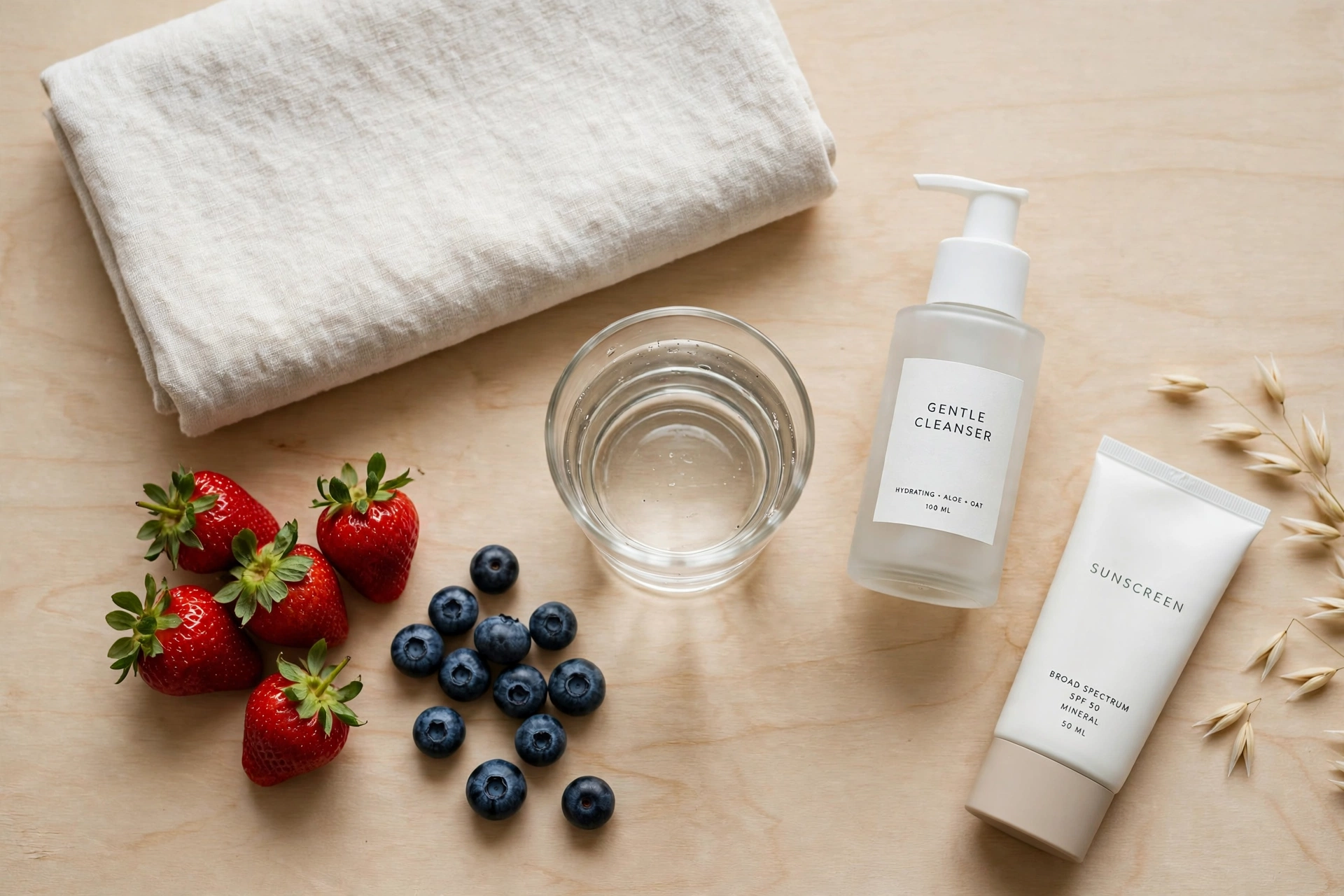
Habits support glow, but a gentle routine does the daily work. The routine is short: cleanse, moisturize, protect. That is the whole system for natural glow.
Step 1: Gentle cleanse. Wash morning and night with a gentle cleanser. The goal is to remove dirt, oil, and sunscreen without stripping the skin. If your face feels tight after washing, the cleanser is too harsh. Use lukewarm water, not hot. Hot water strips the natural oils that keep skin soft.
Step 2: Moisturize. Moisturizer locks water into the skin. Oily skin needs a light gel. Dry skin needs a richer cream. Skipping moisturizer never helps, even for oily skin. When oily skin gets dry, it often makes more oil to compensate. Apply moisturizer while the skin is still slightly damp, so it seals the water in.
Step 3: Sunscreen every morning. Sunscreen is the most important step for natural glow. Sun damage causes dark spots, wrinkles, and dullness. Use a broad spectrum sunscreen with SPF 30 or higher every morning, even on cloudy days. Reapply if you spend the day outside. Shade, hats, and sunglasses help too, but they do not replace sunscreen.
That is the full routine. You can add one treatment, such as a vitamin C derivative or a niacinamide serum at 2 to 5 percent, if you want to target dullness or uneven tone. Pick one, not both, and give it 8 weeks. More products do not mean more glow. They mean more chances for irritation.
Home Remedies: What Helps and What Hurts
Home remedies are popular, and some are genuinely useful. Others are risky. Here is a clear split.
What helps: A cool water rinse in the morning can refresh the skin and reduce puffiness. A gentle face massage with clean hands, using your moisturizer, can boost blood flow and help the product absorb. A plain honey mask, left on for 10 minutes and rinsed off, can feel soothing for some people, because honey attracts water. Aloe vera gel from a plain, fragrance free product can calm sun exposed skin. These are mild, low risk habits.
What hurts: Lemon juice is acidic and can irritate skin and make it more sensitive to the sun. Baking soda is alkaline and strips the barrier. Undiluted essential oils can cause rashes and burns. Toothpaste on pimples irritates the skin and can leave dark marks, especially on dark skin. Harsh scrubs made from sugar or salt scratch the surface. If a remedy stings, burns, or turns the skin red, stop using it. Stinging is not a sign that it is working. It is a sign that it is damaging the barrier.
The safest rule is simple. If a remedy is gentle, plain, and does not sting, it is probably fine. If it is acidic, abrasive, or strongly scented, skip it. Your skin barrier is the thing that creates glow. Anything that damages it works against you.
Frequently Asked Questions
How can I get glowing skin naturally?
Sleep 7 to 9 hours, drink water through the day, eat a varied diet with plenty of fruit and vegetables, move your body daily, and protect your skin from the sun. Use a gentle routine: cleanser, moisturizer, and sunscreen every morning. Habits support glow, but they do not replace skin care.
Do home remedies work for glowing skin?
Some do, some do not. Gentle habits like sleep, sun protection, and a cool water rinse help. Harsh kitchen remedies like lemon juice, baking soda, and undiluted essential oils can irritate skin and damage the barrier. A plain honey mask or aloe vera gel can feel soothing for some people.
Can I get glowing skin without products?
Partly. Habits improve how skin looks, but cleanser, moisturizer, and sunscreen do work that habits cannot replace. Cleanser removes dirt and oil. Moisturizer locks water into the skin. Sunscreen prevents the sun damage that causes dullness and dark spots. You can keep the routine very short, just those three steps, and still get a real glow.
Does drinking water make skin glow?
Water helps the body stay hydrated, but it does not fix dry skin on its own. The skin barrier and moisturizer do the real work of holding water in the skin. Drink water through the day, but do not expect it to replace a moisturizer. Both matter, and they do different jobs.
How long does natural glow take?
Most people see a real change in 4 to 8 weeks of steady habits and a gentle routine. Skin renews itself in about 4 weeks, so no habit or product shows full results in a few days. Sleep and hydration improve first, in 1 to 2 weeks. Tone and texture follow in 3 to 4 weeks.
Sources and Further Reading
- American Academy of Dermatology (dofollow): sun protection, sleep, and basic skin care guidance.
- Cleveland Clinic guide to skincare ingredients (nofollow): gentle, evidence based skin care basics.
- CeraVe (nofollow): gentle cleanser and moisturizer product details.
This article is general information only, not medical advice. If you have a skin condition, are pregnant, or take prescription skincare, talk to a dermatologist before changing your routine.
Related guides
What Is Skinimalism? The Fewer Products Guide
Why Is My Skin Dull? Causes and Real Fixes
2 thoughts on “How to Get Glowing Skin Naturally at Home: Real Habits”
Comments are closed.