

Quick Answer
Glowing skin for dark skin starts with an even tone, not with shine. Dark or melanin rich skin glows best when dark spots are calm, the surface is smooth, and the skin is well hydrated. The routine is gentle cleansing, a brightening treatment such as vitamin C or niacinamide, a moisturizer that fits your skin type, and a sunscreen with no white cast every morning. Picking at breakouts and skipping sunscreen are the two habits that most often block the glow. For the full glow system by skin type, see our guide on how to get glowing skin.
What Makes Dark Skin Glow Different
Dark skin has more melanin, the pigment that gives skin its color. Melanin offers some natural protection from the sun, but it does not make skin immune to sun damage. Dark skin still burns, still gets dark spots, and still ages from sun exposure. The idea that dark skin does not need sunscreen is a myth, and it is one of the main reasons glow routines fail for dark skin.
The second difference is how dark skin heals. When dark skin is irritated, it often leaves a dark mark behind. This is called post inflammatory hyperpigmentation, and it is the most common glow blocker for dark skin. A pimple, a scratch, a harsh scrub, or a strong acid can each leave a mark that takes months to fade. That is why gentle care matters more, not less, for dark skin. Every irritation is a future dark spot.
The third difference is how products look on the skin. Many mineral sunscreens leave a white or grey cast on dark skin, which dulls the glow and looks ashy. Many moisturizers look fine on light skin but leave a grey film on dark skin. The routine below is built around products that disappear into the skin, so the glow comes through cleanly.
None of this means dark skin is harder to care for. It means the priorities are different. Even tone comes first. Hydration comes second. Shine comes last, and it follows naturally once the first two are in place.
The Dark Skin Glow Routine, Step by Step
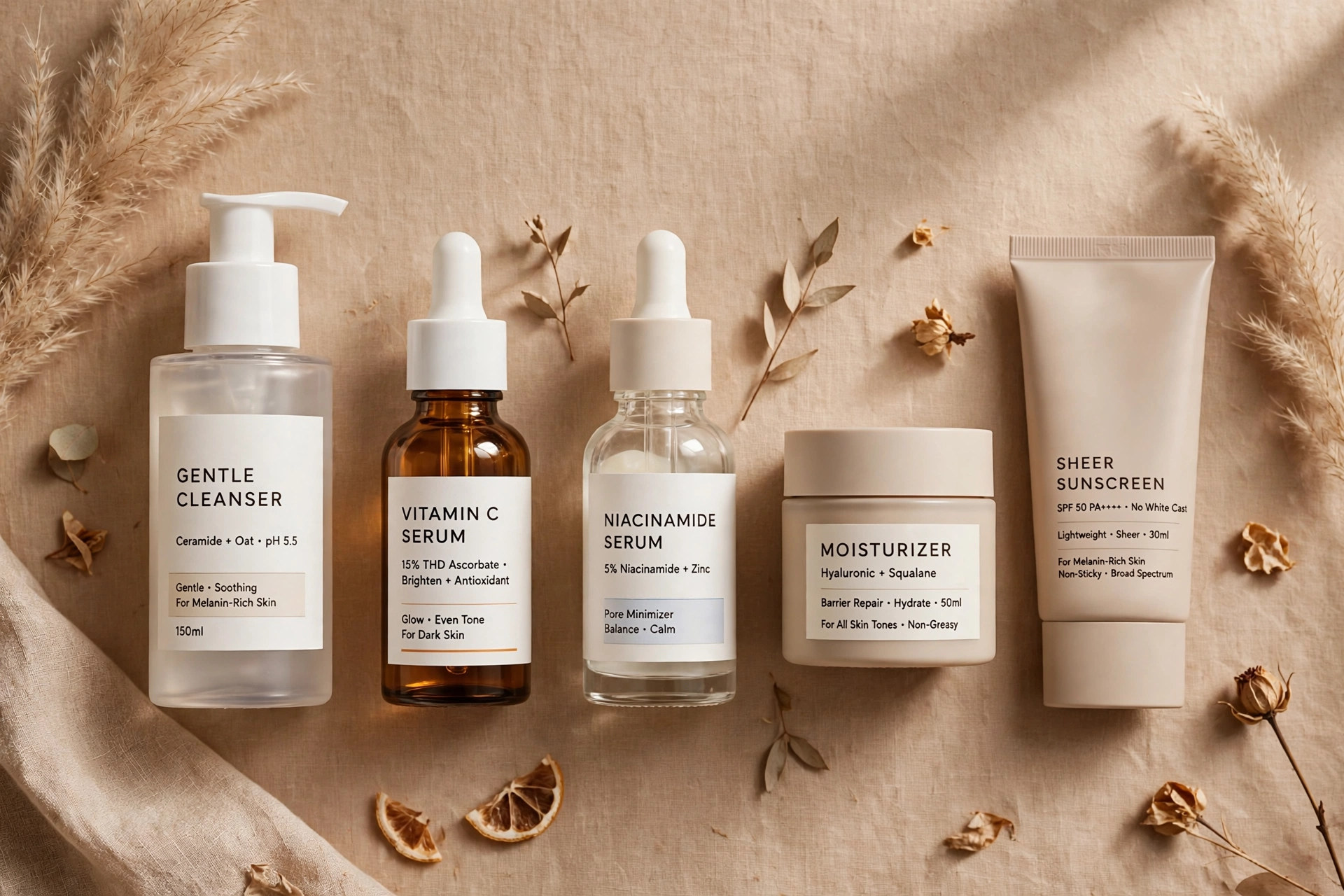
The routine has the same four steps as every glow routine. The product choices are tuned for dark skin.
Step 1: Gentle cleanser, morning and night. Use a gentle cleanser that does not leave the skin tight. A gel cleanser suits oily dark skin. A cream cleanser suits dry dark skin. Wash with lukewarm water for about 30 seconds and pat dry. Do not scrub. Harsh scrubs irritate dark skin and can leave dark marks. If your face feels tight after washing, the cleanser is too harsh.
Step 2: Brightening treatment. This is the step that does the most work for dark skin glow. Vitamin C brightens dull skin and fades dark spots. Niacinamide evens tone, calms redness, and supports the barrier. Pick one to start. A vitamin C derivative is a gentler option than pure L-ascorbic acid, and it suits sensitive skin better. A niacinamide serum at 2 to 5 percent suits most people. Use the treatment after cleansing and before moisturizer. Give it 8 to 12 weeks. Dark spots fade slowly, and no product erases them overnight.
Step 3: Moisturizer for your skin type. Moisturizer locks in hydration and keeps the surface smooth. Oily dark skin needs a light gel moisturizer. Dry dark skin needs a richer cream. The right moisturizer disappears into the skin with no grey or ashy film. If a cream leaves a white cast, it is the wrong product for your tone. Rub it in fully and check in daylight, not just in bathroom light.
Step 4: Sunscreen with no white cast, every morning. Sunscreen is the most important step for dark skin glow. Sun exposure darkens existing spots and creates new ones, which works directly against an even tone. Use a broad spectrum sunscreen with SPF 30 or higher every morning. The key is the finish. Look for sheer, invisible, or tinted formulas. Chemical sunscreens usually leave no white cast. Tinted mineral sunscreens blend into dark skin far better than untinted ones. Test any sunscreen on your jawline in daylight before buying a full size.
At night, skip sunscreen and add a hydrating layer instead. A hyaluronic acid serum on damp skin, under the moisturizer, helps with the smooth, plump base that makes glow visible.
Sunscreen Without the White Cast
The white cast problem is real, and it is the top reason many people with dark skin skip sunscreen. The cast comes from mineral filters, mainly zinc oxide and titanium dioxide, which sit on the skin as a white layer. On light skin it blends in. On dark skin it shows as a grey or purple film.
There are three practical fixes. First, try a chemical sunscreen. These use filters that absorb into the skin rather than sitting on top, so they usually leave no cast. Second, try a tinted mineral sunscreen. The tint is made to blend with skin tone, and it covers the white layer underneath. Third, try a gel or fluid formula. These spread thinner and dry clearer than thick creams.
Fading Dark Spots Safely
Dark spots are the main glow blocker for dark skin, and fading them takes patience and gentle care. The spots usually come from breakouts, sun exposure, or irritation. The routine that fades them is the same routine that builds glow, done consistently.
Vitamin C is the first choice for brightening. It works by slowing the extra pigment production that creates dark spots. A vitamin C derivative is gentler than pure L-ascorbic acid and suits sensitive skin better. It is a different form, not the same thing, and it works more slowly.
Niacinamide is the second choice. It evens tone, calms redness, and helps the barrier hold water. It is gentle enough for daily use and works well alongside vitamin C, as long as you introduce one at a time.
What does not help is strong exfoliation. Harsh scrubs and high strength acids can irritate dark skin and create new dark marks. Use a gentle exfoliant, such as lactic acid for dry skin or BHA for oily skin, one to two times a week at most. Never exfoliate every day. If your skin stings or turns red, stop and go back to the gentle steps for a week.
The most important rule is simple: do not pick at breakouts. Picking is the fastest way to create a dark mark that lasts for months. Treat the breakout gently, leave it alone, and let the brightening routine do its work. A spot that is left alone fades in 8 to 12 weeks. A spot that is picked can last far longer.
| Approach | How it helps | Time to see change |
|---|---|---|
| Vitamin C derivative daily | Slows extra pigment, brightens | 8 to 12 weeks |
| Niacinamide 2 to 5 percent daily | Evens tone, calms redness | 4 to 8 weeks |
| Sunscreen every morning | Stops spots getting darker | Prevents new spots from day one |
| Gentle exfoliation 1 to 2 times a week | Clears dull surface cells | 3 to 4 weeks |
| Not picking breakouts | Prevents new dark marks | Immediate prevention |
How Long Until You See a Glow?
Skin renews itself in about 4 weeks, and dark spots fade more slowly than that. Here is a realistic timeline.
In the first 1 to 2 weeks, hydration improves. Skin feels softer and ashiness fades. In weeks 3 to 4, tone looks more even as niacinamide and vitamin C start working. In weeks 4 to 8, the real glow appears. The surface is smoother and the shine is clearer. Dark spots take 8 to 12 weeks to fade visibly, and deeper spots can take longer. That is normal. The sunscreen you wear every day is what stops new spots from forming while the old ones fade.
Frequently Asked Questions
How do I get glowing skin with dark skin?
Focus on an even tone first. Gentle cleansing, a brightening treatment such as vitamin C or niacinamide, a moisturizer that fits your skin type, and a daily sunscreen with no white cast build a clear glow. Add a hyaluronic acid serum on damp skin at night for extra hydration. Avoid picking at breakouts, because picking creates dark marks.
Does dark skin need sunscreen?
Yes. Dark skin still gets sun damage, dark spots, and uneven tone from the sun. Melanin offers some natural protection, but it does not make skin immune. Sunscreen is essential for glow, because sun exposure darkens existing spots and creates new ones. Use a broad spectrum sunscreen with SPF 30 or higher every morning.
What sunscreen has no white cast on dark skin?
Look for sheer, invisible, or tinted formulas. Chemical sunscreens usually leave no white cast because their filters absorb into the skin. Tinted mineral sunscreens blend into dark skin far better than untinted ones. Gel and fluid formulas also dry clearer than thick creams. Apply in two thin layers and check the finish in daylight.
How do I fade dark spots on dark skin?
Use vitamin C or niacinamide daily, wear sunscreen every day, and avoid picking at breakouts. A vitamin C derivative is a gentler option that fades spots slowly without irritation. Niacinamide evens tone and calms redness. Fading takes 8 to 12 weeks, and deeper spots can take longer.
Why does my skin look ashy?
Ashiness is usually dryness. Dry skin scatters light unevenly, which reads as grey or ashy, especially on the cheeks and forehead. The fix is hydration in layers: a hydrating toner, a hyaluronic acid serum on damp skin, and a moisturizer that fits your skin type. Check products in daylight, because bathroom light hides ashiness.
Sources and Further Reading
- American Academy of Dermatology (dofollow): sun protection and hyperpigmentation guidance for all skin tones.
- Cleveland Clinic guide to skincare ingredients (nofollow): vitamin C, niacinamide, and brightening ingredients.
- Neutrogena (nofollow): sunscreen product details, including sheer formulas.
This article is general information only, not medical advice. If you have a skin condition, are pregnant, or take prescription skincare, talk to a dermatologist before changing your routine.
Related guides
How to Get Glowing Skin Naturally at Home: Real Habits
What Is Skinimalism? The Fewer Products Guide