

Quick Answer
How to get glass skin for oily skin? Use light, water based layers and skip heavy creams. A gel cleanser, a hydrating toner, a hyaluronic acid serum, a niacinamide serum, a gel moisturizer, and a matte sunscreen build a clear, glassy shine without grease. Exfoliate with BHA two to three times a week. The shine should look like water on the skin, not oil. For the full glow system by skin type, see our guide on how to get glowing skin.
Why Oily Skin Struggles With Glass Skin
Oily skin already shines. That sounds like a head start, but it is not the right kind of shine. Oil shine is heavy, sits mostly in the T-zone, and makes pores look bigger. It also breaks down makeup and can clog pores. Glass shine is different. It is light, even, and wet looking. It comes from water inside the skin, not oil on top of it.
The mistake most people with oily skin make is trying to dry the skin out. Harsh cleansers, strong toners, and skipping moisturizer all feel like they fight oil. In practice they often make it worse. When skin gets stripped, it can produce more oil to compensate. The barrier gets irritated, the surface gets rough, and the shine looks greasy instead of glassy.
The fix is the opposite of drying. Hydrate the skin with light water layers, control oil with the right active ingredients, and protect the barrier. Oily skin that is well hydrated often looks calmer and produces less surface oil over time. That is the foundation of this whole guide.
Oil Shine vs Glass Shine
It helps to know the difference clearly, because the routine is built to create one and reduce the other.
| Feature | Oil shine | Glass shine |
|---|---|---|
| Source | Sebum on the surface | Water held inside the skin |
| Look | Heavy, greasy, uneven | Light, clear, wet looking |
| Where it sits | Mostly T-zone | Even across the face |
| Pores | Look bigger | Look smaller and smoother |
| By midday | Gets worse | Holds with blotting |
| Fix | Oil control plus hydration | Light water layers |
The Oily Skin Glass Routine, Step by Step
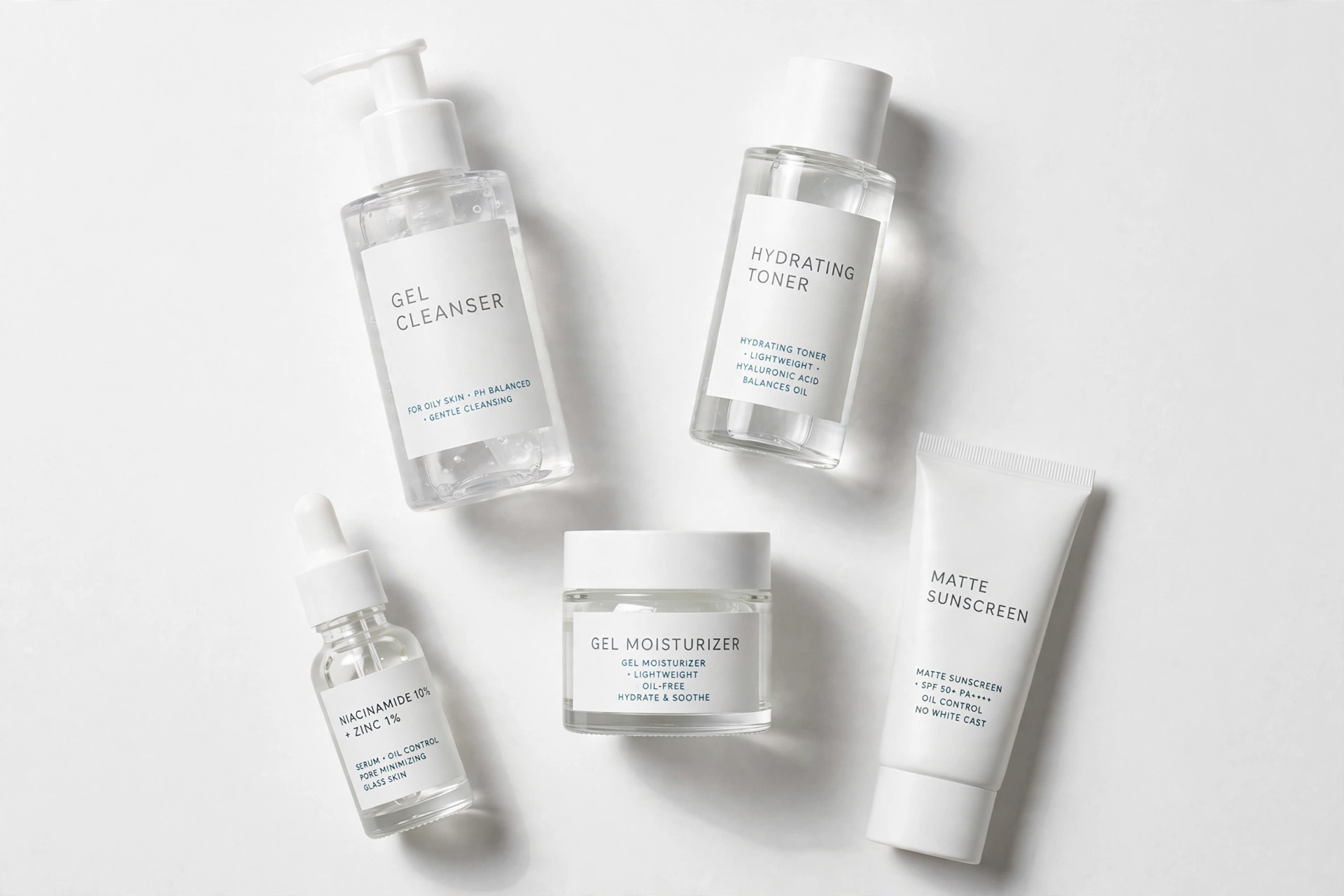
Every step uses a light texture. Thick products trap heat on oily skin and slide off by midday. Thin layers absorb, stack cleanly, and last longer.
Step 1: Gel cleanser, morning and night. Use a foaming or gel cleanser made for oily skin. Wash for about 30 seconds, rinse with lukewarm water, and pat dry. Hot water strips the skin and can trigger more oil. If your face feels tight after washing, the cleanser is too harsh. Switch to a gentler gel. Wash twice a day, and always wash after sweating. Do not wash three or four times a day. Over washing strips the barrier.
Step 2: Hydrating toner. Pat a light hydrating toner on with your hands. This is the first water layer. It should feel like water, not like a sticky syrup. If a toner feels heavy or leaves a film, it is the wrong one for oily skin. Wait a few seconds until it feels slightly tacky, then move on.
Step 3: Hyaluronic acid serum. Put two or three drops on damp skin. Hyaluronic acid pulls water into the skin, which is what creates the plump, glassy base. Use it right after toner while the skin is still slightly damp. A pea sized amount covers the whole face. More serum does not mean more glow. It means a sticky layer that pills under moisturizer.
Step 4: Niacinamide serum. Niacinamide is the key active for oily glass skin. It calms redness, evens tone, and reduces the look of pores. It also helps the skin barrier hold water. Use it after the hyaluronic acid serum. A 2 to 5 percent niacinamide serum suits most people. A 10 percent serum is stronger and can irritate some skin, so start lower and only move up if your skin is happy with it.
Step 5: Gel moisturizer. This step surprises people with oily skin, but it is essential. A light gel moisturizer seals in the water layers below it. Choose an oil free gel moisturizer. It should feel cool and light, not rich or waxy. If your skin feels tight an hour after moisturizing, the gel is too light or you need a slightly richer gel. If it feels greasy, use less product.
Step 6: Matte sunscreen in the morning. Sunscreen protects the glow from sun damage, which causes roughness and dark spots. For oily skin, pick a light, oil free sunscreen with a matte or natural finish and SPF 30 or higher. Gel sunscreens and fluid sunscreens usually sit best on oily skin. Reapply if you spend the day outside.
At night, skip sunscreen and let the gel moisturizer be the last step. That is the whole routine. Six steps, all light, all water based.
Exfoliation: The Step That Makes the Surface Smooth
Glass skin needs a smooth surface, and that is where exfoliation comes in. Dead skin cells build up and scatter light, which makes skin look flat and dull. A BHA exfoliant, such as salicylic acid, works inside the pores and clears the buildup that causes blackheads and rough texture. It is the best exfoliant type for oily skin.
Use BHA two to three times a week, at night, after cleansing and before the other layers. Start with twice a week and build up only if your skin stays calm. Never use it every day. Daily exfoliation strips the barrier, and a stripped barrier looks red and irritated, not glassy.
A gentle AHA, like lactic acid, can help with surface dullness, but BHA is the first choice for oily skin because it works inside pores. You do not need both. Pick BHA, use it patiently, and let it do the work over weeks, not days.
Products That Work, and Products to Skip
The product list for oily glass skin is short. A gel cleanser, a light hydrating toner, a hyaluronic acid serum, a niacinamide serum, an oil free gel moisturizer, a BHA exfoliant, and a matte sunscreen. That is the full set. You do not need a facial oil, a heavy cream, or a ten step routine.
Skip heavy creams. They sit on oily skin, trap heat, and slide off. Skip facial oils during the day. Oil on top of oily skin looks greasy, not glassy. Skip harsh scrubs. They scratch the barrier and cause redness. Skip strong astringent toners with high alcohol content. They strip the skin and can trigger more oil over time.
Read the product type on the label, not just the marketing words. A gel moisturizer is a moisturizer, not a serum. A primer is a primer, not a setting spray. The front of the bottle can be vague, so check the back label for what the product actually is. That habit prevents mismatched layers and wasted money.
When you shop, look for the words oil free, gel, and lightweight on moisturizer and sunscreen. Those three words are the best shortcut for oily skin. Avoid the words rich, nourishing, and intensive on daytime products. They usually mean a heavy texture that oily skin does not need.
How Long Until You See It?
Skin renews itself in about 4 weeks, so no routine shows full results in a few days. Here is a realistic timeline for oily glass skin.
In the first 1 to 2 weeks, hydration improves. Skin feels softer and less tight after washing. Makeup sits better. In weeks 3 to 4, tone looks more even and pores look smaller as niacinamide and BHA do their work. In weeks 4 to 8, the real glass finish appears. The surface is smoother, the shine is clearer, and the greasy midday look is calmer. A photo taken in the same light each week makes the change easier to see, because daily progress is slow and hard to notice in the mirror. If nothing has changed after 8 weeks, check that every product is a light gel or fluid.
Frequently Asked Questions
How do I get glass skin with oily skin?
Use light water layers: a gel cleanser, a hydrating toner, a hyaluronic acid serum, a niacinamide serum, a gel moisturizer, and a matte sunscreen. Add BHA two to three times a week to keep pores clear and the surface smooth. Keep every layer thin. The shine should look like water on the skin, not oil.
Will glass skin make oily skin look greasy?
Not if the layers are thin and water based. Heavy creams and facial oils cause grease on oily skin. Gel textures do not. If your skin looks greasy by midday, the usual cause is too much product or a cream that is too rich.
Should oily skin skip moisturizer?
No. Skipping moisturizer can make oily skin produce more oil, because the skin tries to replace the missing moisture. A light, oil free gel moisturizer keeps the barrier balanced and seals in the water layers below it. If your skin feels tight an hour after moisturizing, the gel is too light. If it feels greasy, use less.
How often should oily skin exfoliate for glass skin?
Two to three times a week with BHA, such as salicylic acid, at night. BHA works inside the pores and clears the buildup that makes skin look rough and dull. Start twice a week and build up only if your skin stays calm. Daily exfoliation strips the barrier and causes redness and rebound oil.
What sunscreen works for oily glass skin?
A light, oil free sunscreen with a matte or natural finish and SPF 30 or higher. Gel and fluid sunscreens usually sit best on oily skin because they absorb fast and do not leave a heavy film. Reapply if you spend the day outside. If a sunscreen feels greasy, the answer is a lighter formula, not skipping sunscreen.
Sources and Further Reading
- American Academy of Dermatology (dofollow): oily skin care basics and daily sunscreen guidance.
- Cleveland Clinic guide to skincare ingredients (nofollow): niacinamide and hyaluronic acid basics.
- Neutrogena (nofollow): gel moisturizer and sunscreen product details.
This article is general information only, not medical advice. If you have a skin condition, are pregnant, or take prescription skincare, talk to a dermatologist before changing your routine.
Related guides
Glass Skin Routine for Dry Skin: Deep Hydration Guide
How to Know Your Skin Type: The 30 Minute Test
2 thoughts on “How to Get Glass Skin for Oily Skin: The Light Layer Guide”
Comments are closed.