

Quick Answer
What is glass skin? Glass skin is skin that looks so smooth, clear, and deeply hydrated that it reflects light like a pane of glass. It is a K-beauty term, and it describes the extreme end of glow. You get it by layering hydration in thin steps, keeping the skin barrier healthy, and protecting it from the sun every day. It is not one product or one treatment. If you want the full picture of glow by skin type, start with our guide on how to get glowing skin, then come back here for the glass skin detail.
Where the Term Comes From
Glass skin started in Korean beauty, often called K-beauty. Korean routines have long focused on hydration and a smooth, clear surface rather than heavy coverage. The phrase caught on because it paints a picture anyone can understand. Think of a clean window. Light passes through it and bounces back evenly. That is the look people mean when they say glass skin.
The idea spread through social media, where short videos showed multi-step routines and close ups of very dewy cheeks. Some of those videos made it look like a filter or a makeup trick. It is not. Real glass skin is skin care, not makeup. It takes weeks of steady care, and it looks best in daylight, not under a ring light.
What Glass Skin Actually Looks Like
The look has four traits. First, the surface is smooth. Dead skin cells are cleared away gently, so light reflects evenly instead of scattering. Second, the skin is deeply hydrated. It looks plump, not puffy, and it feels soft to the touch. Third, the tone is even. Dark spots and redness are calmer, so the shine looks clean rather than blotchy. Fourth, the shine is wet looking, not greasy. It sits on the cheekbones and forehead like a light sheen.
That last point matters most. Shine from oil looks heavy and sits in the T-zone. Glass shine looks like water on the skin. It comes from moisture inside the skin, not oil on top of it. That is why the routine focuses on water based layers: toner, serum, moisturizer, in that order.
Glass Skin vs Dewy Skin
People mix these two terms up, and the difference is useful to know. Dewy skin is a light, fresh sheen. It is the look of healthy skin after a good moisturizer. It is soft and natural, and it is easy to get with two or three products. Most people who want a glow are happy with dewy skin.
Glass skin goes further. It is a stronger, clearer shine, with a smoother surface and more visible hydration. It needs more layers and more consistency. Think of dewy skin as a polished table and glass skin as a mirror. Both look good. One takes more work.
The table below sums up the difference in plain terms.
| Feature | Dewy skin | Glass skin |
|---|---|---|
| Shine level | Light, fresh sheen | Strong, clear, mirror like shine |
| Surface | Smooth and soft | Very smooth, almost poreless look |
| Routine length | 3 to 4 steps | 5 to 7 steps |
| Time to see it | 1 to 2 weeks | 4 to 8 weeks |
| Best for | Everyday glow | Special focus on hydration |
| Makeup needed | None | None, but a light highlighter can help |
You do not have to pick one forever. Many people aim for dewy skin most days and push toward glass skin when their skin is in good shape. The routine is the same at its core. Glass skin just adds more hydration layers.
The Glass Skin Routine, Step by Step
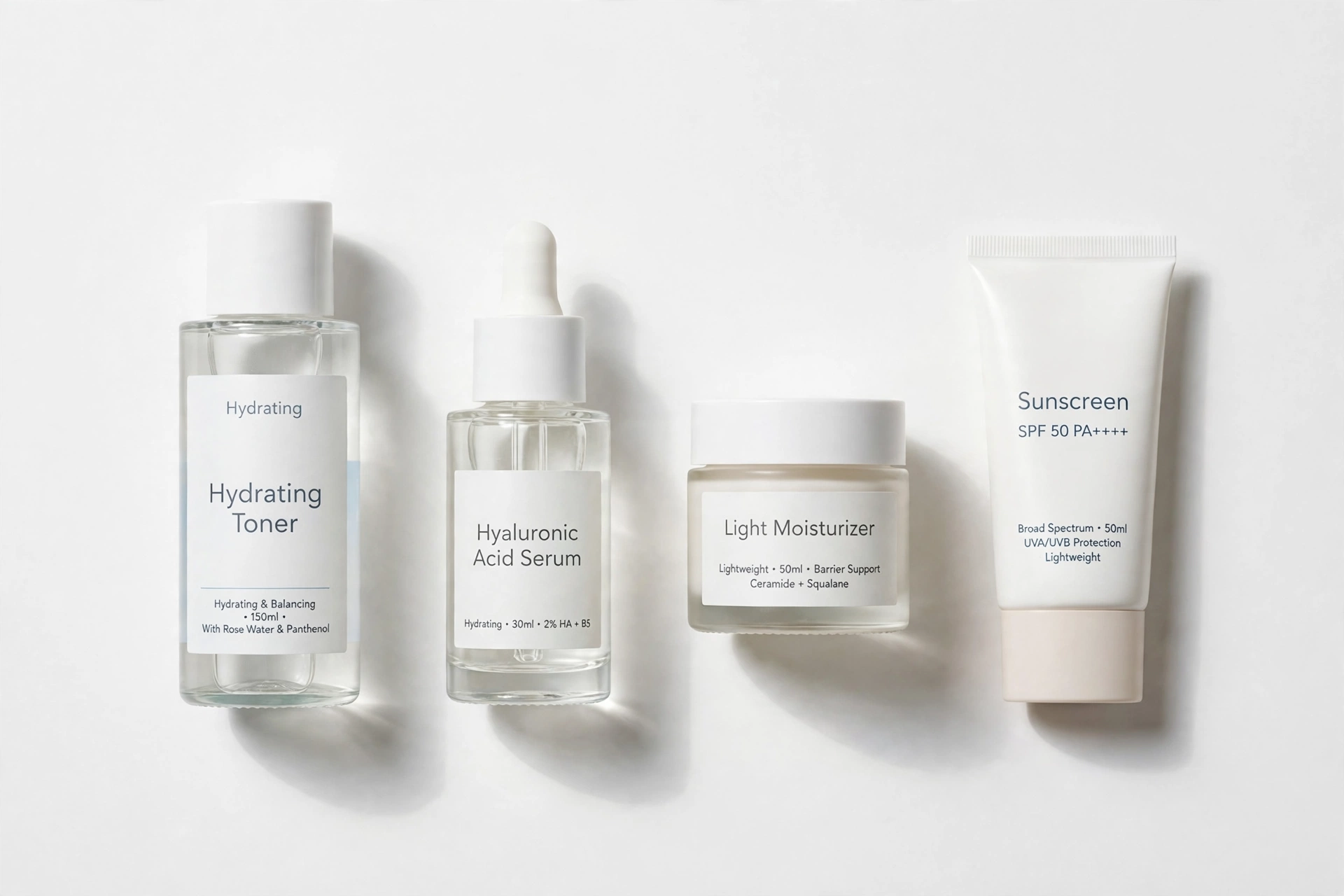
The routine is simple in structure and patient in practice. Each step adds a thin layer of water or moisture. Thick layers trap heat and can clog pores. Thin layers absorb well and stack cleanly.
Step 1: Gentle cleanse. Wash with a gentle cleanser that does not leave your skin tight. If your face feels squeaky after washing, the cleanser is too harsh. A foaming cleanser suits oily skin. A cream cleanser suits dry skin. Wash morning and night, and always remove makeup before bed.
Step 2: Hydrating toner. A hydrating toner is the first water layer. Pat it on with your hands, not a cotton pad, so you do not waste product. Wait a few seconds until it feels slightly tacky, then move on. This step is optional for very oily skin, but it helps dry skin a lot.
Step 3: Hyaluronic acid serum. Hyaluronic acid pulls water into the skin. Put it on damp skin, right after toner, so it has water to hold on to. Use two or three drops for the whole face. A pea sized amount is enough. More serum does not mean more glow. It means a sticky film that pills under moisturizer.
Step 4: Treatment, if you need one. This is the one active step. Niacinamide calms redness and evens tone. A vitamin C derivative can brighten dull skin gently. Pick one, not both at first. Use it after the serum and before moisturizer. If your skin stings or turns red, stop the active and go back to the simple steps for a week.
Step 5: Moisturizer. Moisturizer seals in all the water layers below it. Oily skin needs a light gel moisturizer. Dry skin needs a richer cream with ceramides. The right moisturizer feels comfortable, not heavy, and your skin should not feel tight an hour later.
Step 6: Sunscreen in the morning. Sunscreen is the step that protects the glow. Sun damage causes dark spots, roughness, and dullness, which all work against a glass finish. Use a broad spectrum sunscreen with SPF 30 or higher every morning. Reapply if you spend the day outside.
At night, skip sunscreen and let the moisturizer be the last step. Some people add a thin layer of a sleeping mask once or twice a week for extra hydration. That is optional. The daily routine above is the real work.
Glass Skin by Skin Type
The routine adapts to skin type in small, practical ways. The steps stay the same. The textures and the frequency change.
Oily skin. Use a foaming or gel cleanser, a light hydrating toner, and a gel moisturizer. Skip heavy creams. A niacinamide serum helps with shine and the look of pores. Use BHA two to three times a week to keep pores clear. If the shine looks greasy by midday, you are using too much product, not too little. Cut back to thinner layers.
Dry skin. Use a cream cleanser, a hydrating toner, and a hyaluronic acid serum on damp skin. Follow with a rich cream that contains ceramides. You can add a facial oil as the last step at night, but keep it thin. Dry skin often needs the toner step twice, which is fine as long as each layer is light.
Combination skin. Use one gentle routine for the whole face. Put BHA only on the T-zone and a richer cream only on dry cheeks. This zone by zone approach is the simplest way to get an even shine without overloading one area.
Sensitive skin. Keep the routine short. A gentle cleanser, a simple moisturizer, and sunscreen are enough to start. Add the hyaluronic acid serum only after a week of calm skin. Choose fragrance free products and patch test anything new on your jawline first. For sensitive skin, a niacinamide serum at 2 to 5 percent is the safer pick. A 10 percent niacinamide serum should only be used every other day and only after a patch test, never as the default sensitive skin choice.
Mature skin. Hydration matters even more here, because skin gets drier with age. A cream cleanser, a hyaluronic acid serum, and a rich moisturizer form the base. Vitamin C in the morning can brighten, and a gentle retinol at night can smooth texture, but introduce them slowly and never on the same night as a strong exfoliant.
Frequently Asked Questions
What is glass skin?
Glass skin is skin that looks so smooth and hydrated it reflects light like a pane of glass. It is a K-beauty term for the extreme end of glow. You get it by layering hydration in thin steps, keeping the skin barrier healthy, and wearing sunscreen daily. It is not one product, and it is not makeup.
Is glass skin the same as dewy skin?
No. Dewy skin is a light, fresh sheen that comes from a simple routine and healthy hydration. Glass skin is a stronger, clearer shine with a smoother surface and deeper hydration. Dewy skin takes 3 to 4 steps and shows in 1 to 2 weeks. Glass skin takes 5 to 7 steps and shows in 4 to 8 weeks.
Can I get glass skin with drugstore products?
Yes, for most people. The core of glass skin is hydration, not price. A gentle cleanser, a hyaluronic acid serum, and a good moisturizer do the job. Add a hydrating toner and daily sunscreen, and you have the full routine.
How long does it take to get glass skin?
Most people see a real change in 4 to 8 weeks of daily care. Skin renews itself in about 4 weeks, so no routine shows full results in a few days. Hydration improves first, in 1 to 2 weeks. Tone and texture follow in 3 to 4 weeks.
Does glass skin work for oily skin?
Yes, if you use light layers. Oily skin needs a foaming or gel cleanser, a light hydrating toner, and a gel moisturizer, not heavy creams. A niacinamide serum helps with shine and the look of pores. Use BHA two to three times a week to keep pores clear. If the shine looks greasy by midday, use thinner layers.
Sources and Further Reading
- Cleveland Clinic guide to skincare ingredients: how hyaluronic acid and other hydrators work.
- American Academy of Dermatology: daily sunscreen and basic skin care guidance.
- CeraVe: cleanser and moisturizer product details.
This article is general information only, not medical advice. If you have a skin condition, are pregnant, or take prescription skincare, talk to a dermatologist before changing your routine.
Related guides
How to Get Glass Skin for Oily Skin: The Light Layer Guide
Glass Skin Routine for Dry Skin: Deep Hydration Guide
2 thoughts on “What Is Glass Skin? The Clear, Dewy Glow Explained”
Comments are closed.